


Is this real, or am I dreaming? Because I genuinely had to do a double-take. Meryl Streep and Anna Wintour on the cover of Vogue…together?
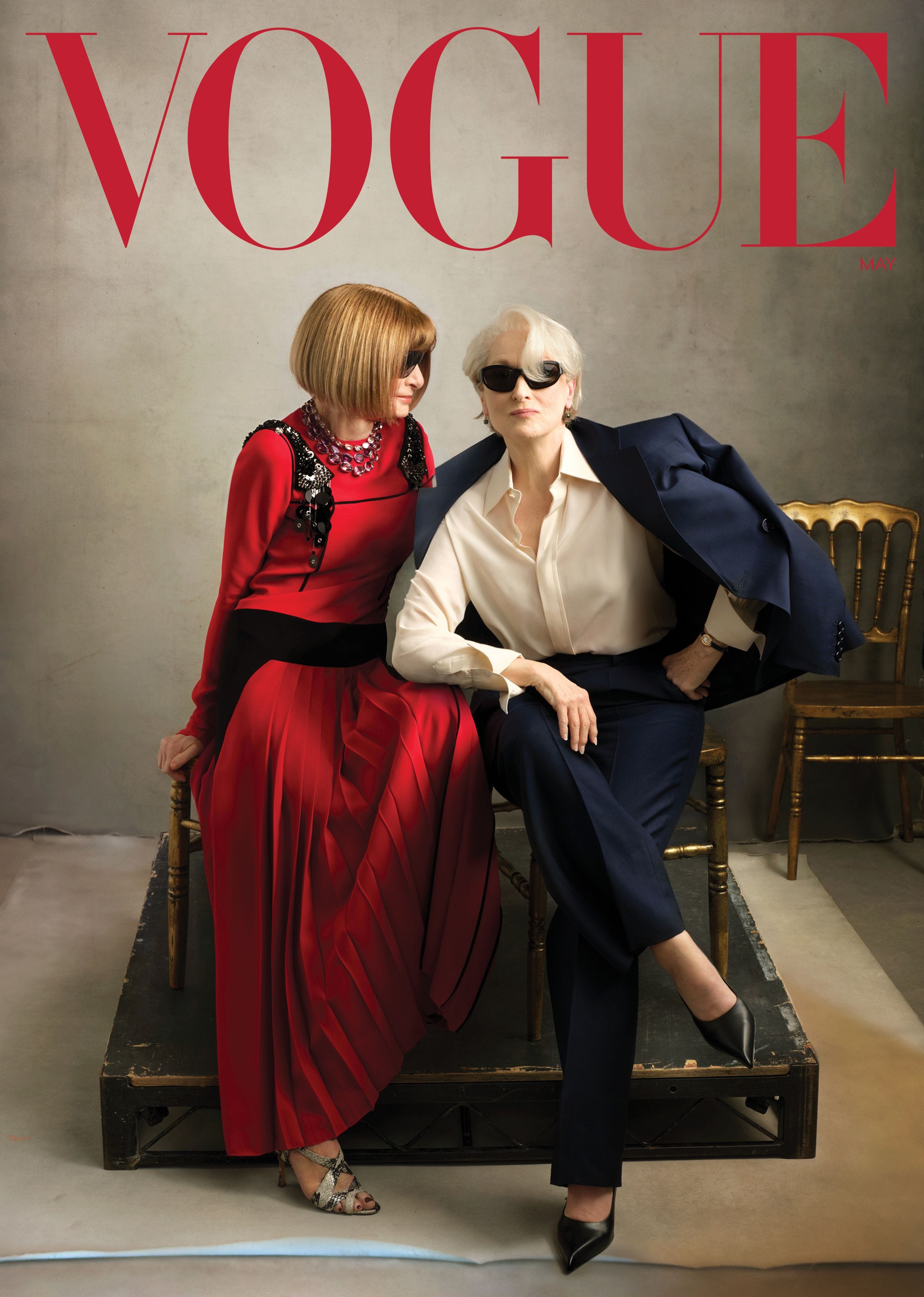
This cover story drops ahead of the upcoming release of The Devil Wears Prada 2, with Meryl reprising her role as Miranda Priestly — the iconic, ice-cold editor-in-chief of Runway, a character famously inspired by Anna Wintour herself.
So seeing the two of them side by side, in on the same moment, feels surreal.
Especially considering Anna has historically kept her distance from Devil Wears Prada references. The fact that she’s leaning into it now, in such a playful, self-aware way, makes this whole thing even more iconic.
And the team behind this shoot? Completely stacked.
Shot by Annie Leibovitz, arguably one of the most legendary portrait photographers ever, and styled by Grace Coddington, literal fashion royalty. From model to Vogue creative director (1988–2016), she’s shaped the visual language of fashion for decades.
So yes, expectations were high.
Conceptually, I love it. The casting alone carries so much cultural weight. But this shoot had all the ingredients to be iconic — and visually, it played it too safe.
The styling is very classic. Very “Anna,” very “Miranda.” And I get it — that’s the point. But I can’t lie, I wish they’d pushed it further. Give me something unexpected. Something sharper. Something more fashion-forward.
They had so much to play with, with the whole “fashion editor” gimmick, that I’d love to have been fed something more camp.
And clearly, I must say it again — Vogue and that blank studio wall? I don’t know what kind of chokehold it has on them, but it’s getting tired. For a moment this big, I needed more drama, more environment, more storytelling.
One thing I do love, though, is the dynamic: Meryl facing front, Anna looking at her. That subtle role reversal? Very smart.
But if it were up to me, the elevator shot should’ve been the cover.
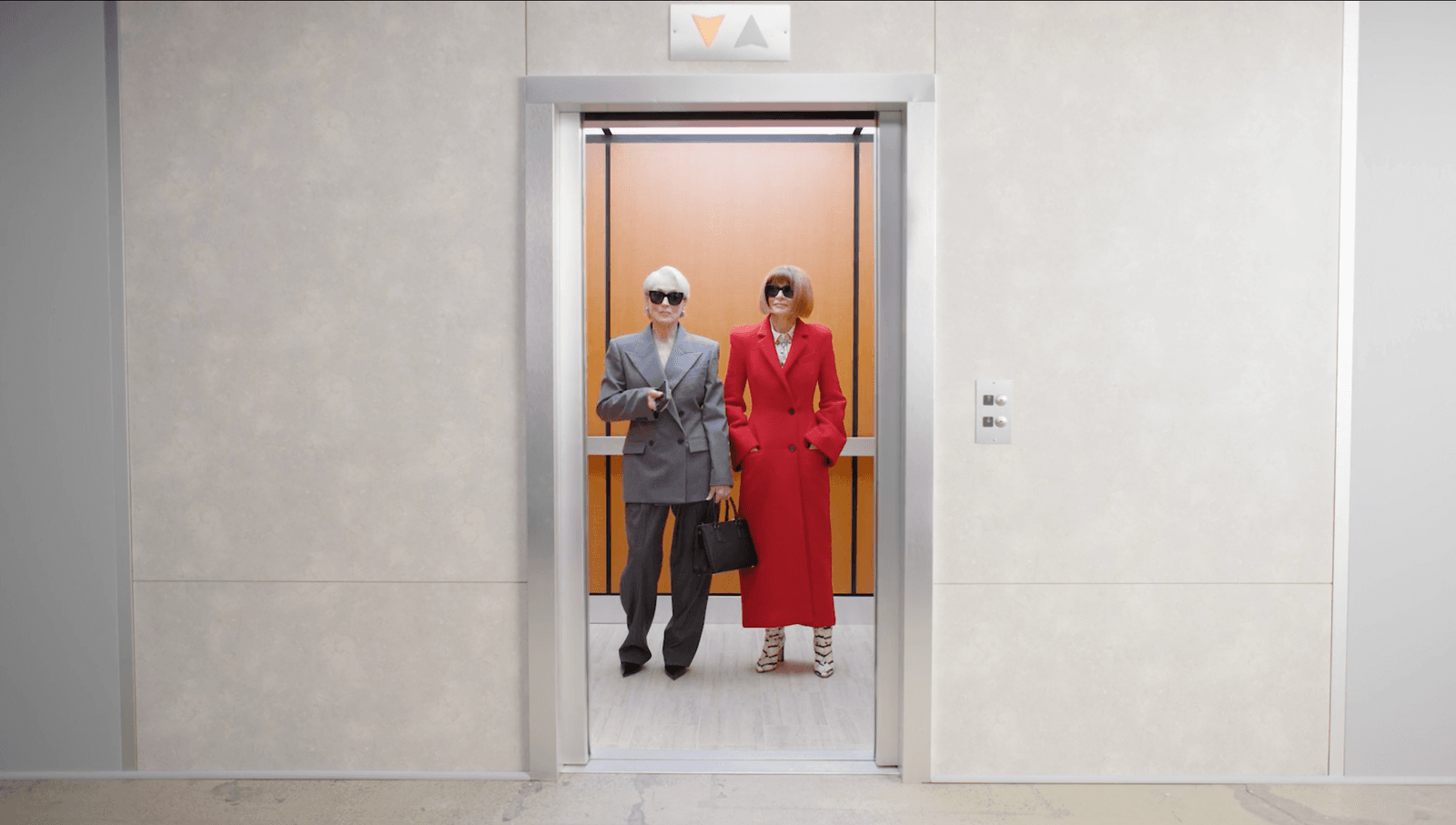
The symmetry is perfect, the framing is insanely satisfying, and it actually feels like it’s telling a story — which is exactly what a cover like this should do.
What makes it all even more frustrating is that the video proves they knew exactly how to do it.
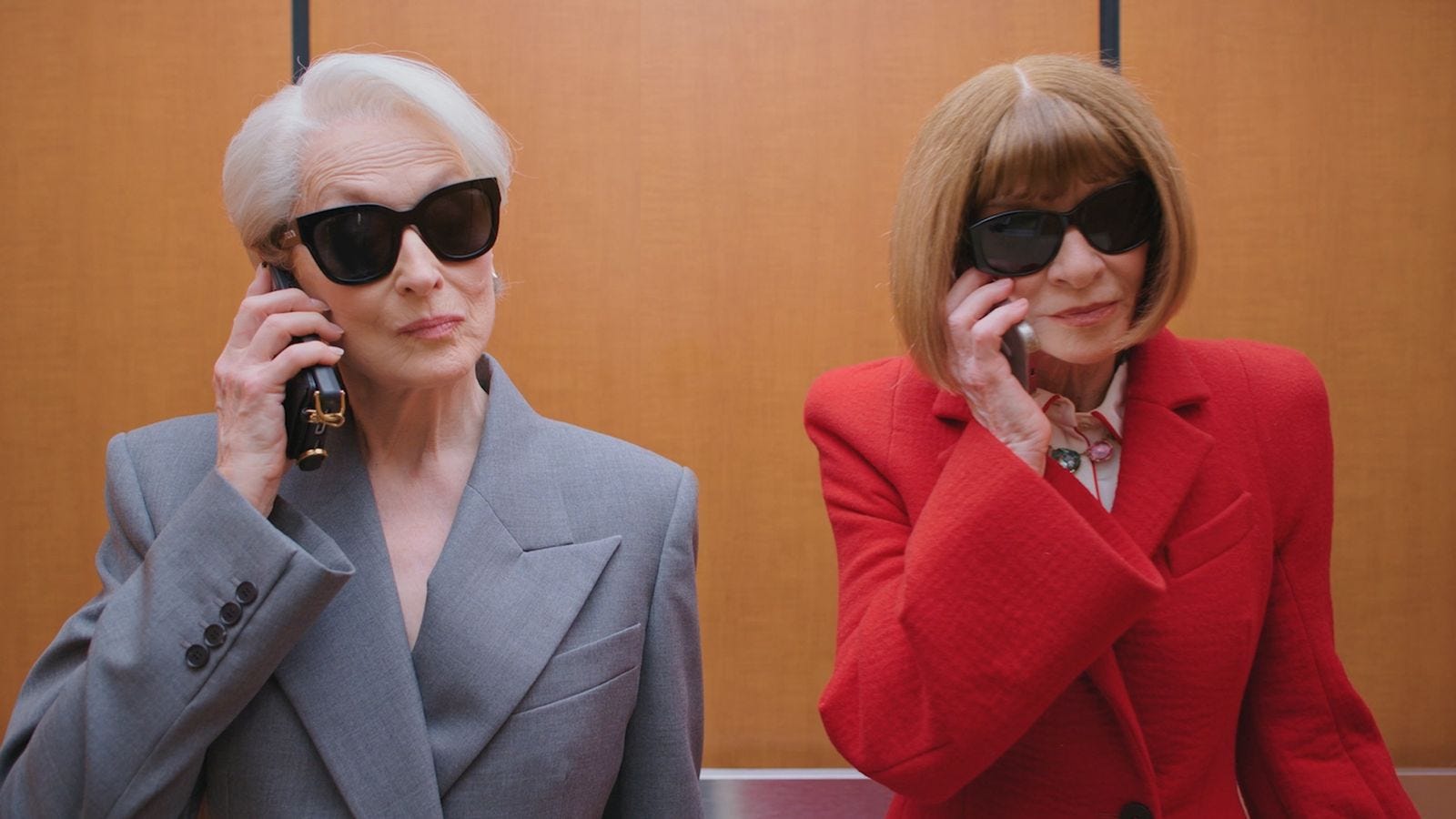
Set in that stark, almost clinical elevator, it fully leans into the camp and humor that the cover barely touches. Meryl, in full Miranda mode, and Anna, playing herself, circle each other like they know exactly who they’re dealing with — but refuse to admit it. It’s controlled, awkward, and just a little bit funny in that very specific, fashion-world way.
When Anna casually lists places they might’ve met — the Met Gala, the Oscars — and Meryl responds with that perfectly timed, ice-cold “definitely not,” it lands. It’s dry, it’s self-aware, and it feels like an inside joke the entire industry is in on.
And the details? Full of intention. The elevator music is “Dancing Queen,” which is a cheeky nod to Meryl’s Mamma Mia! legacy. It adds a layer of camp and humor that the images are missing. Even the ending — bonding over shoes — is a wink to the whole fashion-editor archetype.
Visually, it’s minimal, but here it actually works. The tight space, the symmetry, the tension. It’s deliberate. It sets a scene. It tells a story.
Which just makes one thing very clear: the video understands the moment better than the cover does.
Another highlight of the shoot for me is the shot of them in the backseat of a car.
The angle is fresh, their poses play off each other with comedy, and it, again, feels very “fashion editor.”
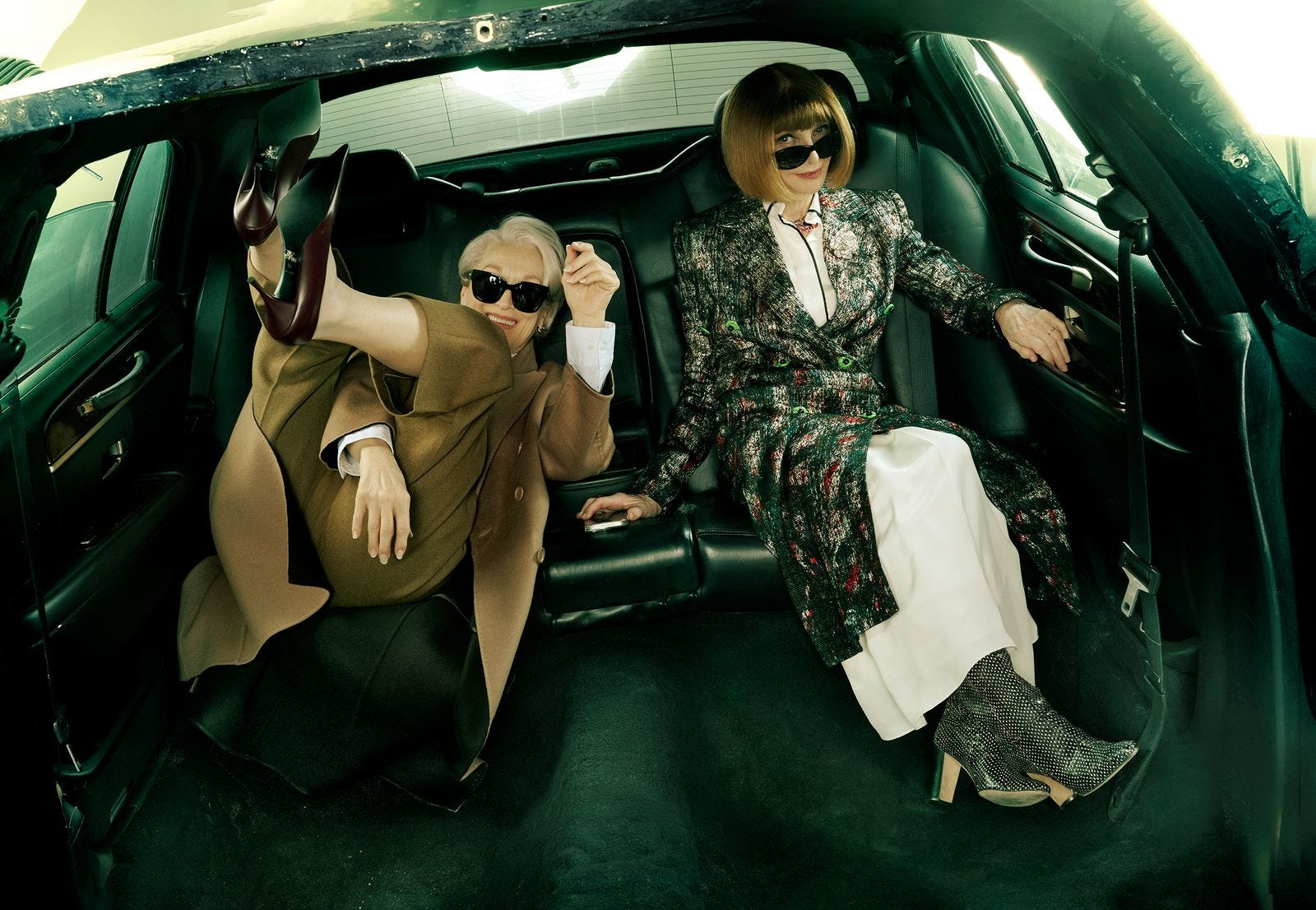
All of these shots — the elevator, the backseat, the video — have that oomph the official cover is missing. And especially with a tagline like “seeing double,” the elevator image just feels like the obvious cover choice. It tells the story better. It gives it life. It feeds into the video.
And honestly? For a moment this big, safe just wasn’t the move.