


Last night, Sabrina Carpenter performed her hit single “Tears” from her new album Man’s Best Friend - and let me just say, it was gay as hell. I was living for it.
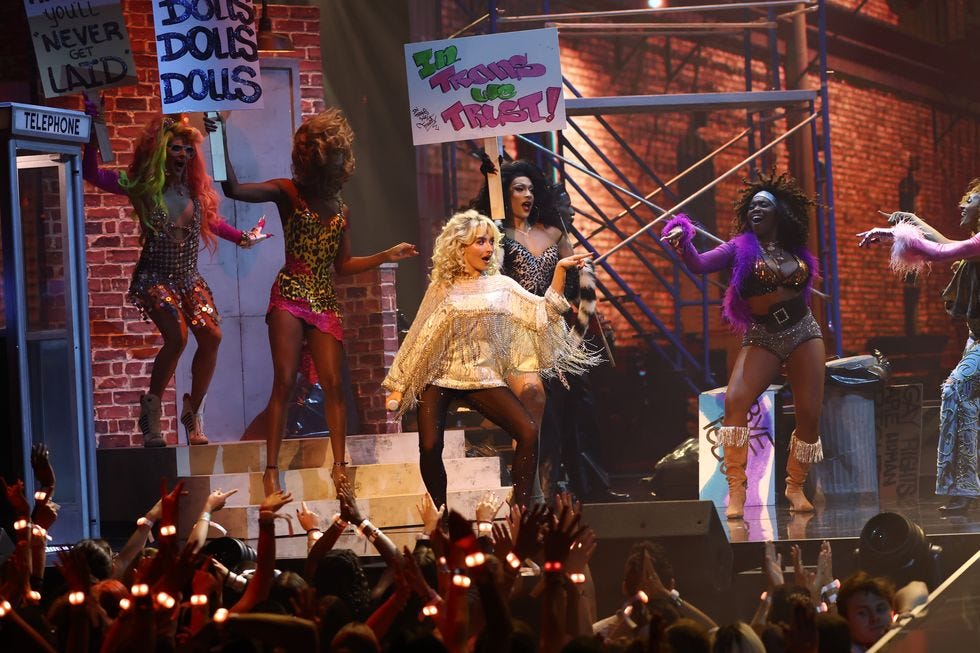
The moment the camera panned to that stage and I saw those queens covered in feathers with their boombox, I knew I was in for a treat. And when Sabrina came out of that manhole… chills. The ensemble consisted of queer individuals of all colors and sizes, including RuPaul’s Drag Race stars Symone, Willam, Denali, Laganja Estranja, and Lexi Love. At one point, they lined the stage holding picket signs that read “For the They’s and the Gay’s,” “Dolls Dolls Dolls,” “Protect Trans Rights,” “Support Drag,” “Good Bi,” and “If You Hate, You’ll Never Get Laid.” Seeing that on one of television’s biggest nights completely overpowered me with emotion. That’s what I live for. That’s what we need.
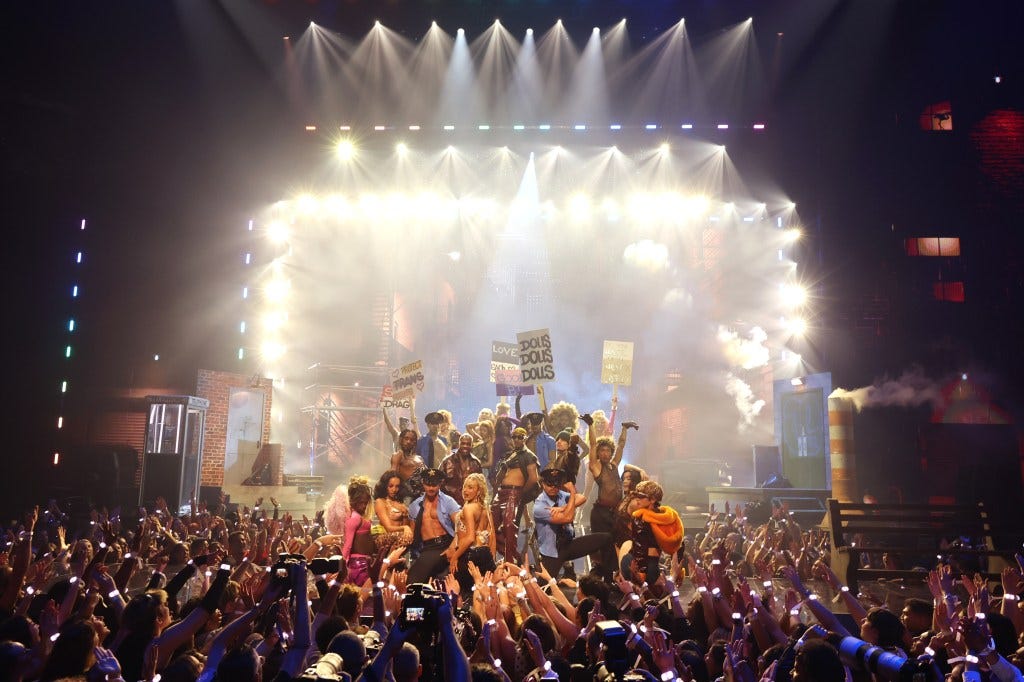
The performance was deeply inspired by the New York City ballroom scene. This year, a few artists have released content that nods to ballroom, but Sabrina’s wasn’t just “inspired” - it was it. Actual ballroom performers like Honey Balenciaga were showcasing their true culture, from the looks to the hand motions of their voguing. It was epic.
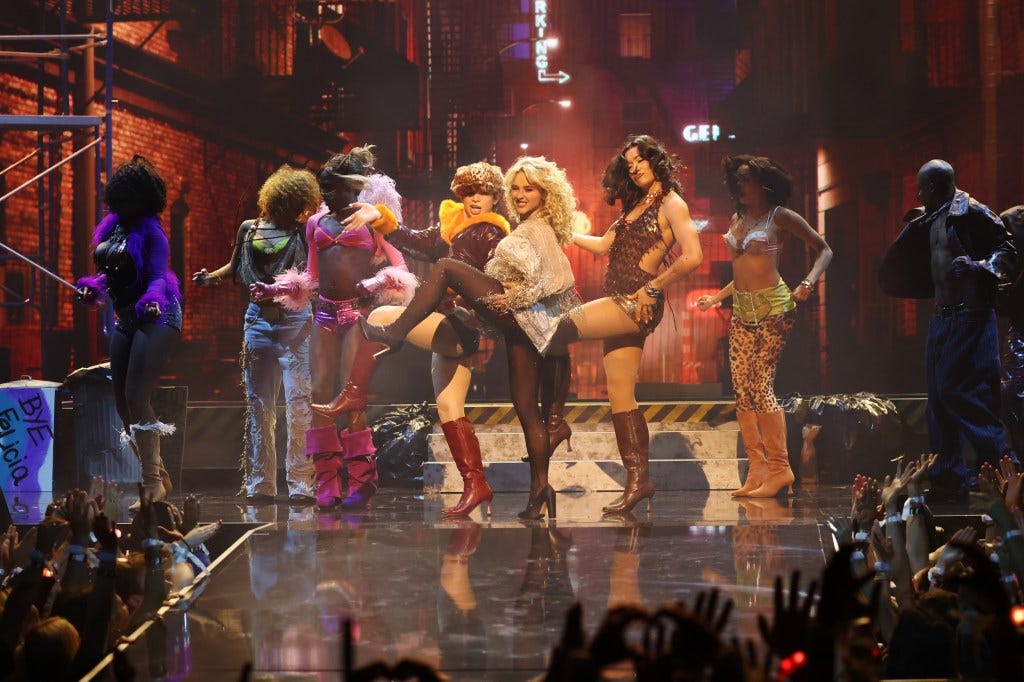
Her very camp “Tears” music video already felt like an attempt to appeal to queer audiences - featuring drag artists and drawing inspiration from Rocky Horror Picture Show, one of the most iconic queer films of all time. But this performance solidified the queer inspiration in this era of her career, and I love that she seems to be showing respect to her sources.
I will admit, I can see how people might perceive Sabrina’s queer inspirations as exploitation. Queer-coded aesthetics are trending hard right now, and tapping into them could be seen as a cash grab. But to me, it doesn’t feel like performative allyship - at least I hope not. It seems like Sabrina has a genuine passion for queer culture and for what queer people have contributed to art. And I can’t complain about her giving that culture exposure, as long as it’s coming from the right place.
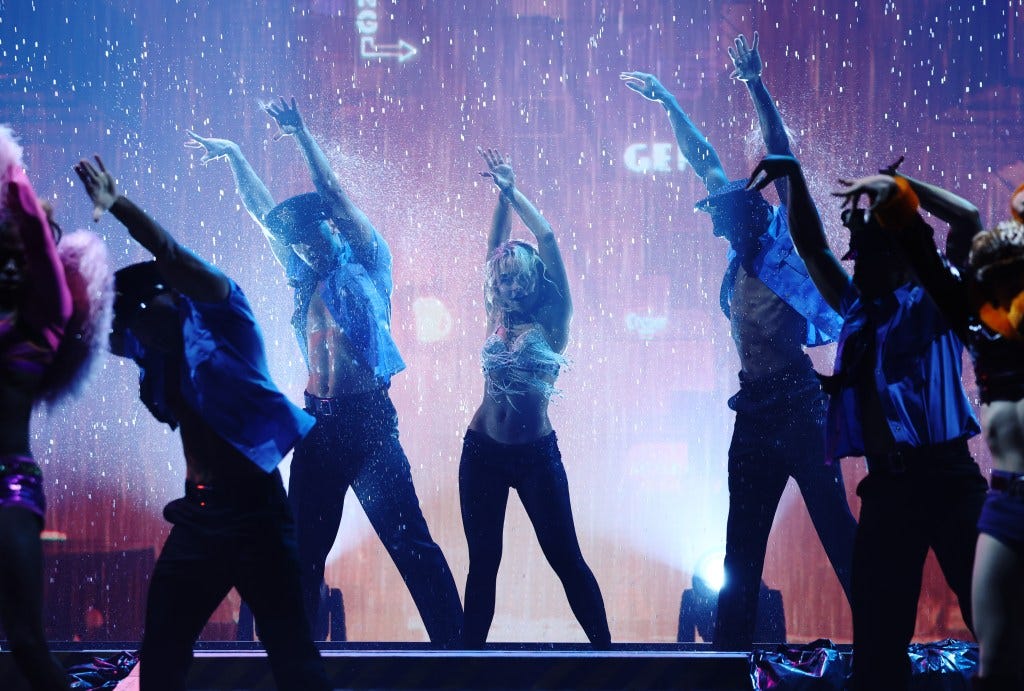
At the moment, her VMA performance brought tears to my eyes. Seeing rich queer culture on stage, drag queens strutting, and signage about trans and gay rights on national television—delivered by one of the biggest pop stars right now—was sensational.