


There’s not a soul on earth who documented fashion and the trend cycle like Bill Cunningham. A gift to fashion lovers and professionals alike, Bill’s photographic capture of everyday people and socialites alike has become both an archive of inspiration and a history lesson.
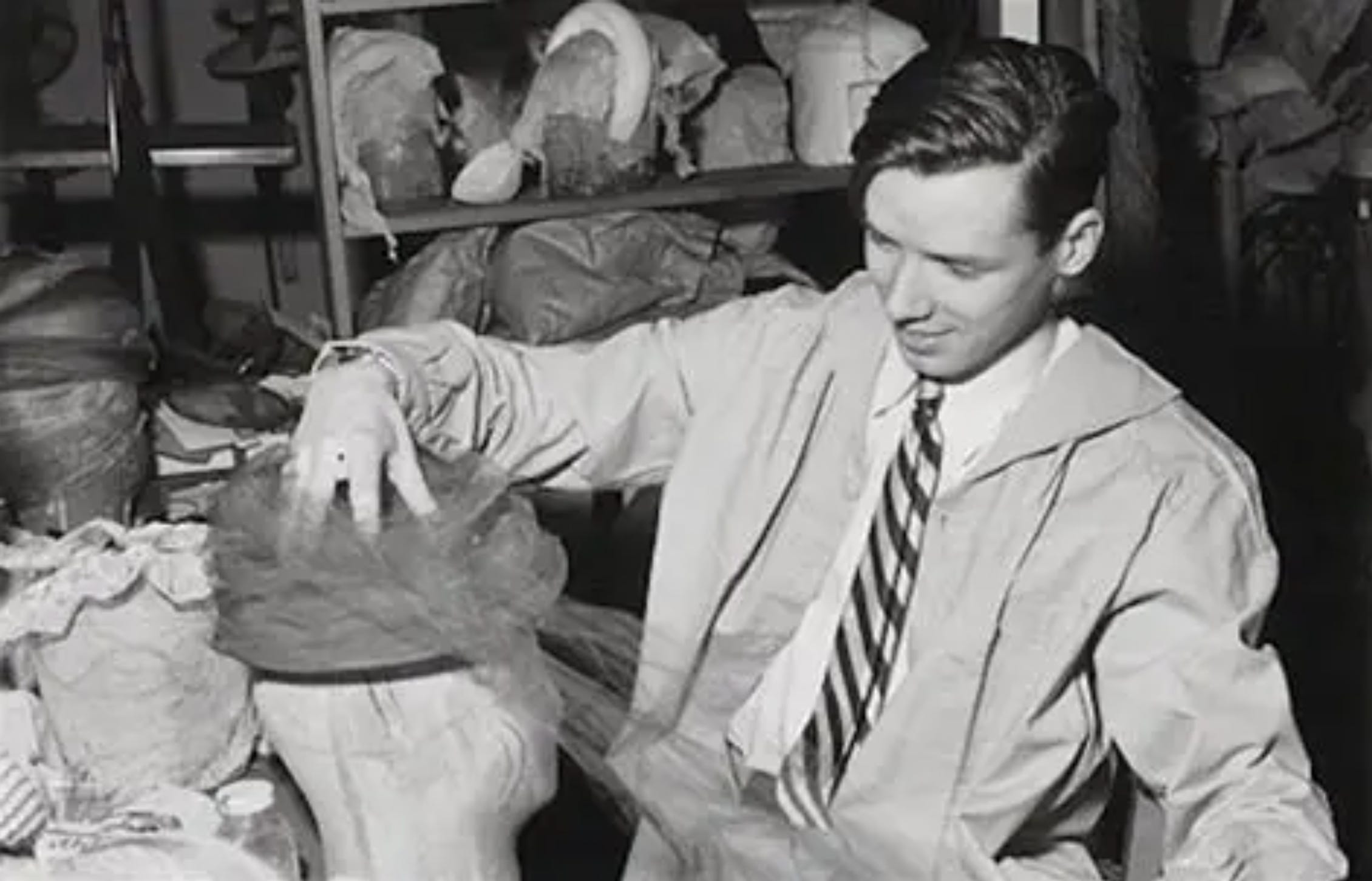
Bill Cunningham moved to New York City at 19 years old in 1948, starting a career in millinery - selling hats to icons like Marilyn Monroe, Joan Crawford, Doris Duke, and Ginger Rogers. And he did it all out of his apartment in Carnegie Hall. How iconic is that?
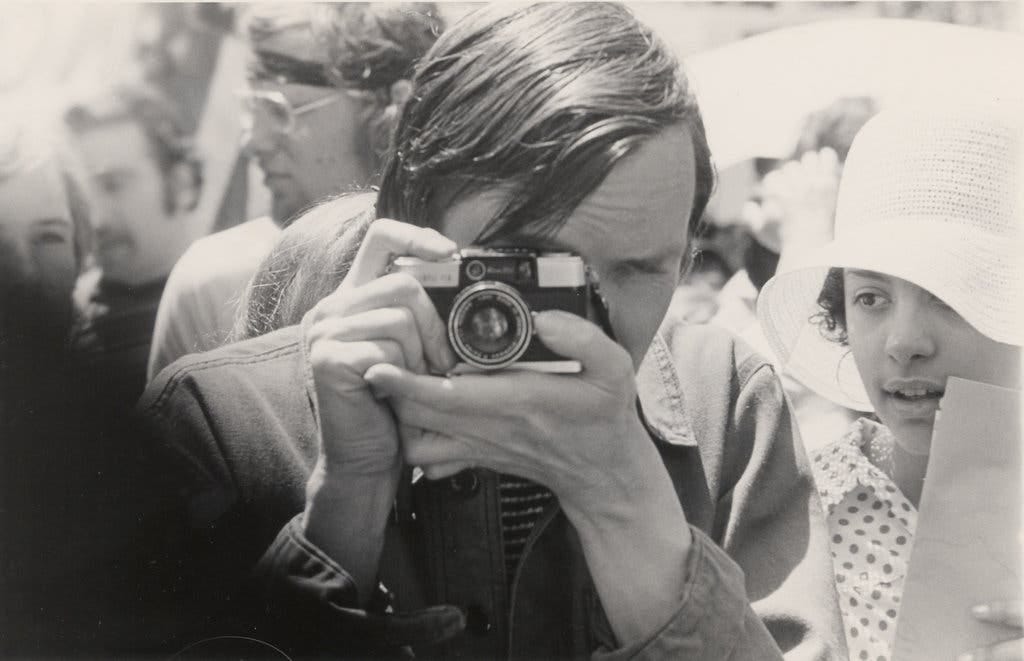
Committed to the art of observing, Bill loved taking notes. In 1967, illustrator Antonio Lopez shifted his path by gifting him an Olympus Pen-D 35mm (camera). Soon after, on Easter Sunday, Times fashion critic Charlotte Curtis encouraged him to photograph a “be-in” at Sheep Meadow. Bill later marked that day - capturing the “flower children” - as the start of his weekends spent roaming Soho and Central Park, documenting street fashion.
He became the first true documenter of street style as we know it. Photographers like the Seeberger brothers in Paris had long chronicled high society, but it wasn’t until Cunningham’s 1960s work that genuine images of style - across classes, shapes, sizes, and colors - prevailed. And Bill didn’t discriminate. He photographed anyone exciting: the young, the old, the black, the white, every style, every aesthetic. He attended fashion shows, shot what he liked there, and then chased the creations on the city streets. Remarkable.
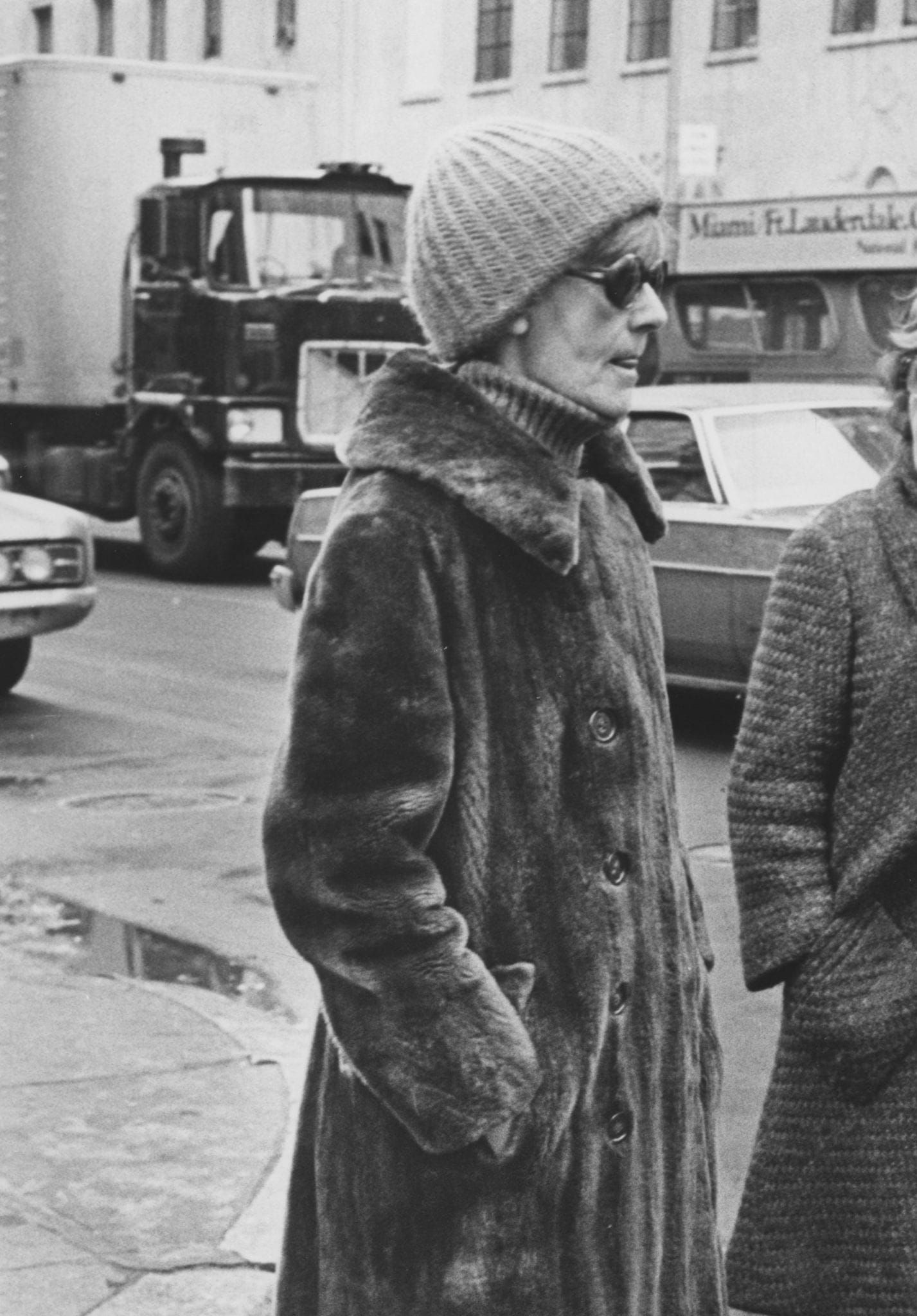
In 1978, a candid photo of Greta Garbo brought him recognition and led to his legendary contributions at The New York Times. That same year, his iconic column On the Street debuted, capturing New Yorkers’ everyday style along Fifth Avenue and 57th Street. His Evening Hours column chronicled high-society events. Over nearly four decades, Cunningham’s perspective became beloved by fashionistas and casual readers alike. Everyone wanted to be in front of his lens.
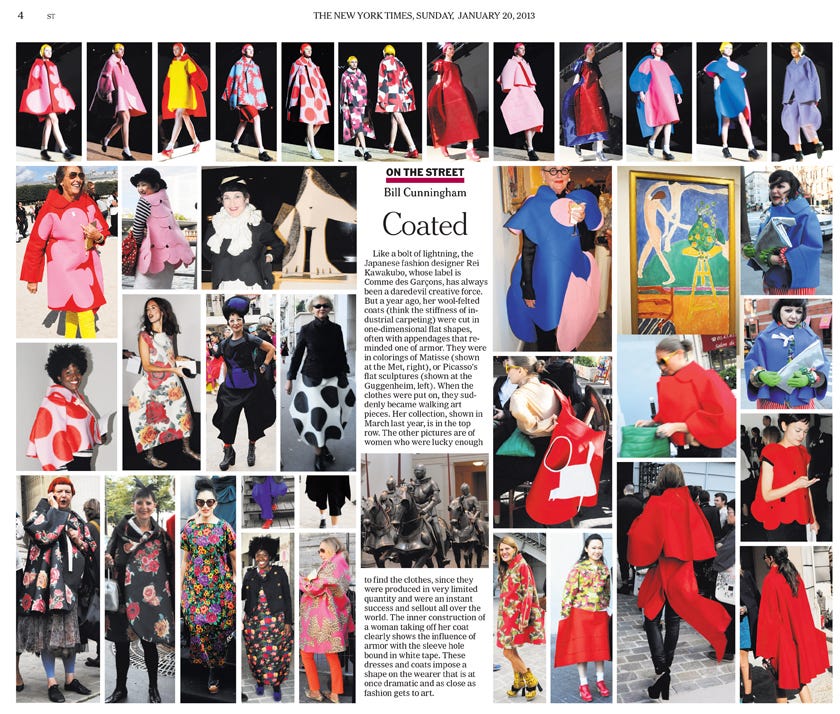
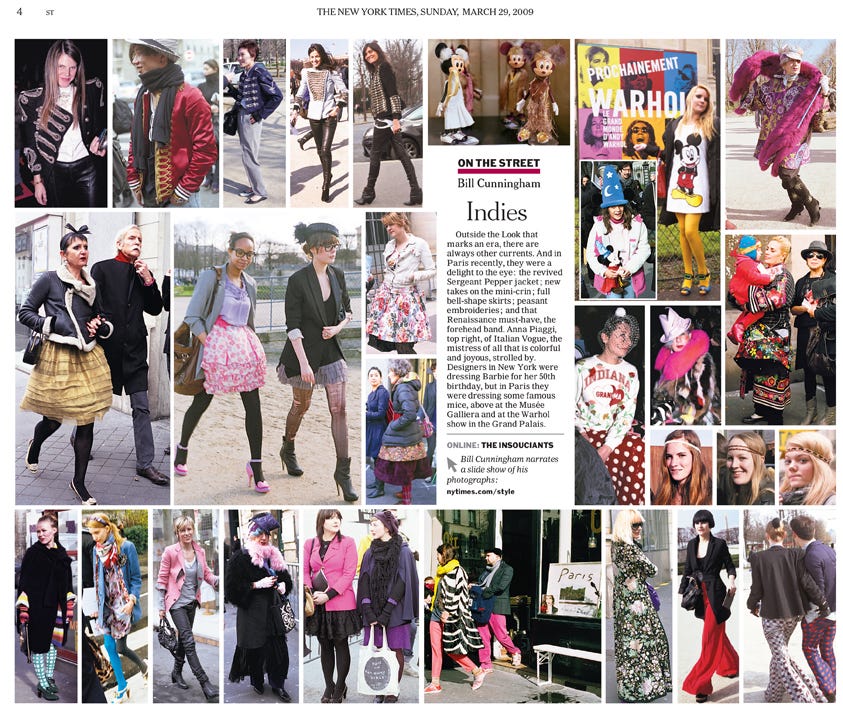
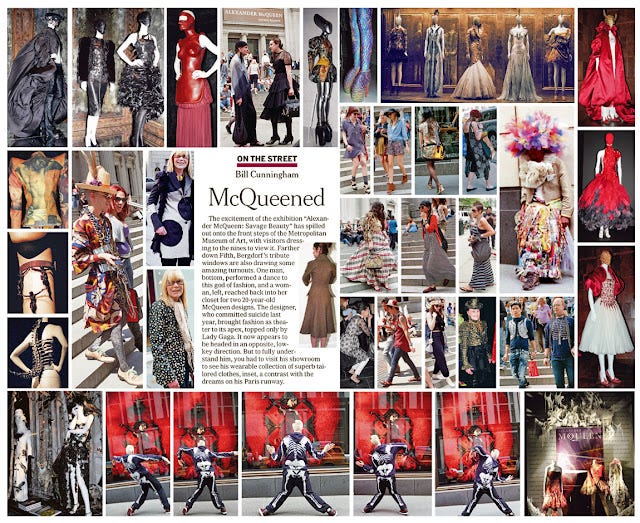
Bill celebrated personal style more than influence or wealth, while also chronicling major cultural and fashion shifts from the late 20th into the 21st century. His commitment was legendary - living in a tiny Carnegie Hall studio with no restroom or kitchen, just rows of filing cabinets stuffed with negatives and photographs. I’d do anything to sift through those cabinets.
His love for fashion was above all else. When asked about romantic love, he once said, “I wouldn’t even think of it. All I cared about was clothes. That was the obsession.”
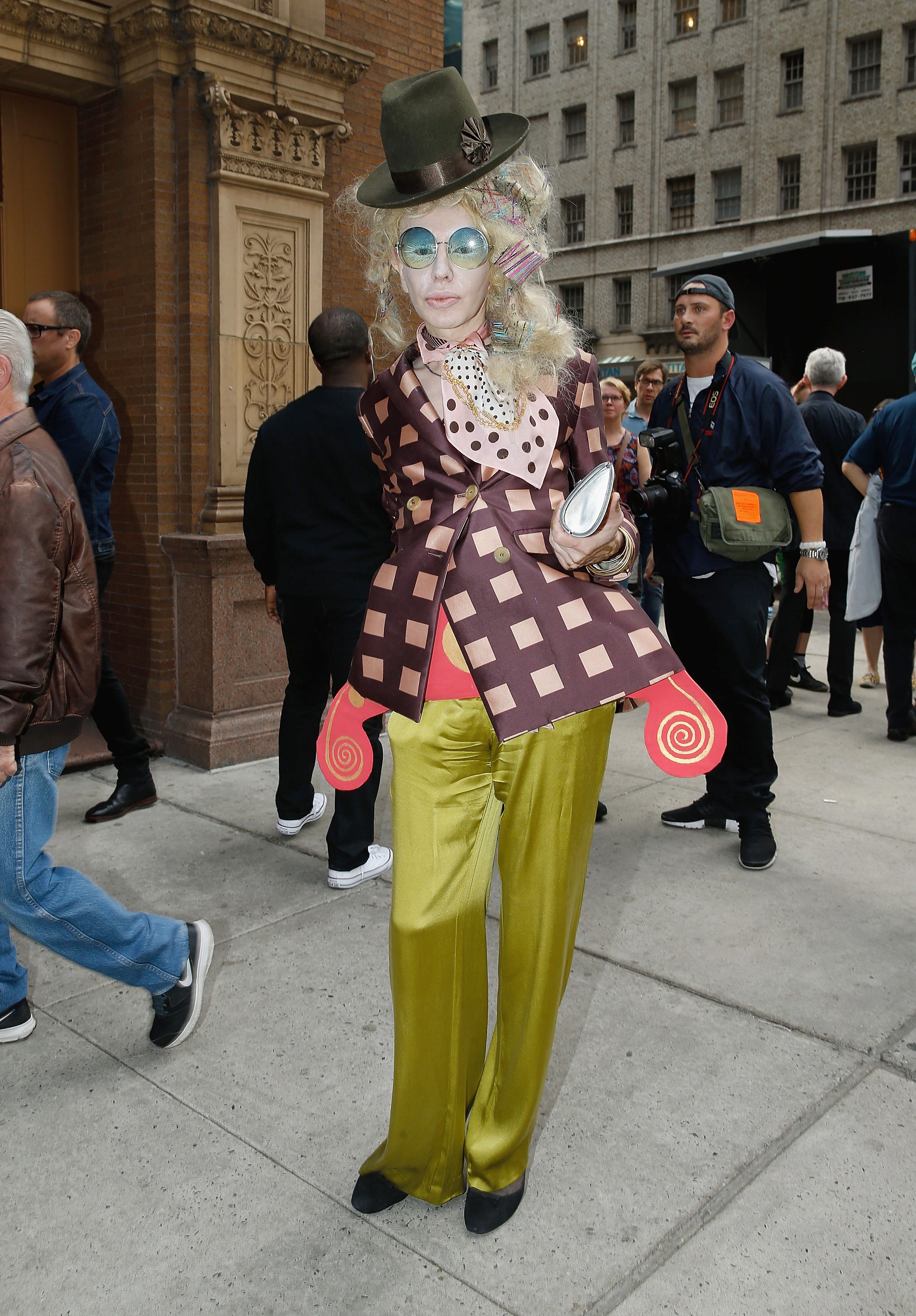
Though he never spoke explicitly about his sexuality, Cunningham became a vital outlet for queer communities in NYC, often photographing the most stylish among them and pushing for their presence in The Times. In the 2010 documentary Bill Cunningham: New York, queer club kid Kenny Kenny recalls being photographed by Bill: “He came to me the next week (in 1986) and he said, ‘I’m so disappointed, The Times said we can’t put you in because you’re wearing a dress,’ and he said, ‘I’m gonna keep trying to get you in.’ He means so much to people like us. Really, he’s an artist.”
And today, his legacy lives on. Every street-style snap, every influencer outfit pic, every fashion blog owes something to Bill Cunningham - the man who showed us that fashion history was happening not just on the runway, but on the sidewalks of everyday life.
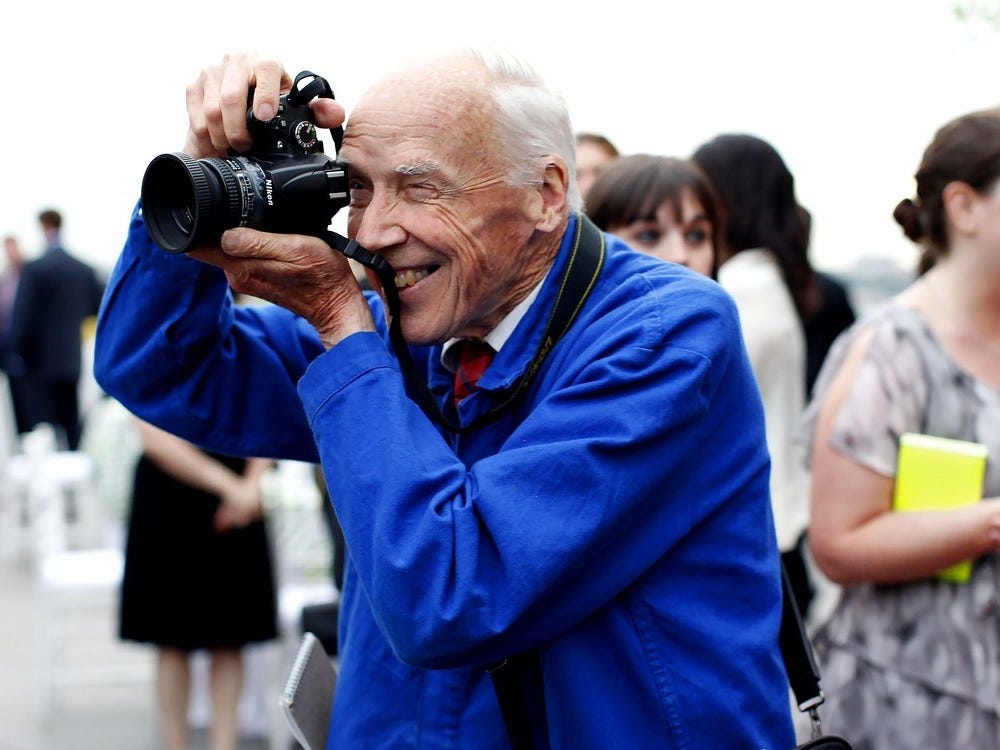
That’s what makes Bill so special to me. Fashion isn’t all about big, glossy covers or name brands, and he sure knew that. His art is a constant reminder that inspiration is all around us. It’s a motivation to get dressed every day and create something unique. Bill may have been behind the camera, but in a way, he’s a lesson on how to look at clothes with a little more curiosity, joy, and respect.