


Mugler just launched its Spring/Summer 2026 campaign, Stardust Aphrodite — the first visual chapter under new Creative Director Miguel Castro Freitas — and it immediately feels like the start of a new era for the house.
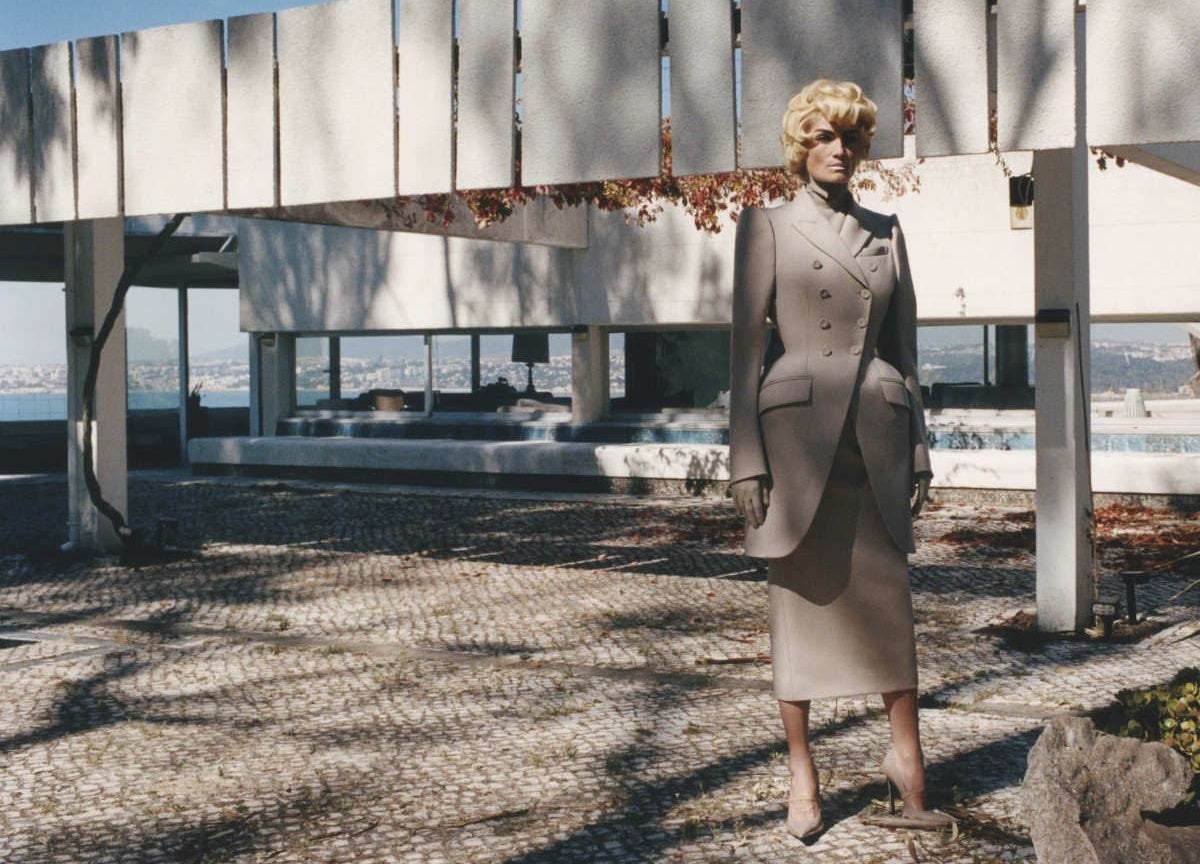
Shot by Robi Rodriguez, the campaign is drenched in surrealism and B-roll film energy: cinematic, eerie, and glamorous in that unmistakable Mugler way, where power and performance are inseparable.
Aesthetically, it sits somewhere between Nadia Lee Cohen and Petra Collins — hyper-stylized, color-forward, and deliberately artificial — with a distinctly dystopian undertone. Industrial backdrops, monochrome gloss, and mannequin-like characters make the visuals feel alien and slightly uncomfortable, in the best way.
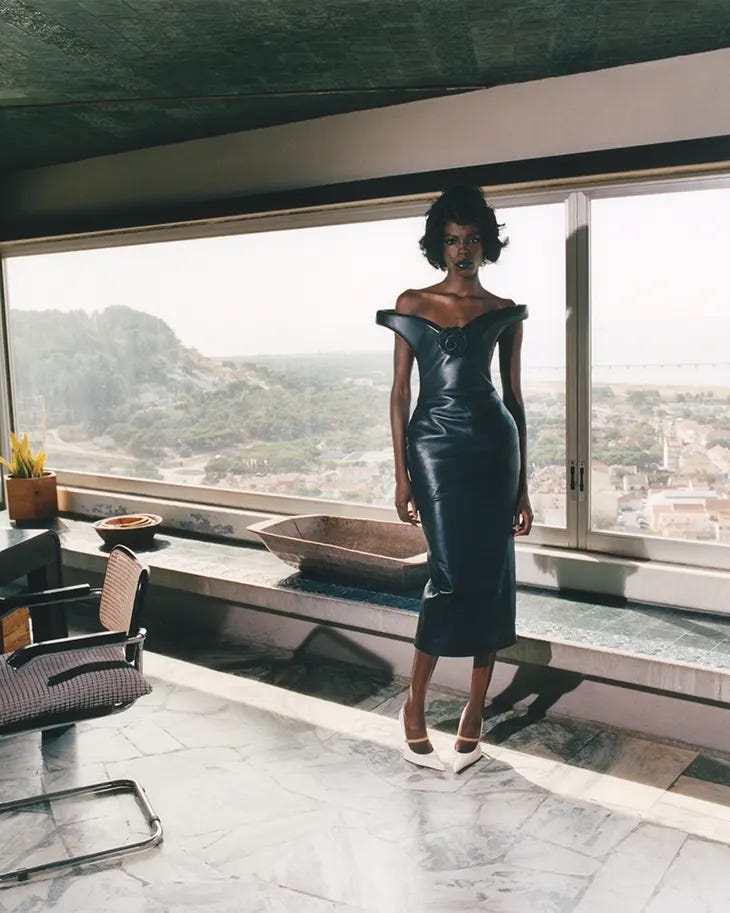
It fits cleanly into the mid-century revival happening right now (especially the 60s), where retro-futurism is being reimagined as glamorous and a bit eerie.
Color-wise, Mugler leans into pale blue and peachy pink — two shades trending hard for SS26 (and yes, I called those) — sharpened by glossy black. The pastels against latex-like finishes create a tension that reads innocence vs. domination, pastel vs. fetish. The all-black looks, especially in leather-like materials with razor shoulders, hit harder next to all that candy color.
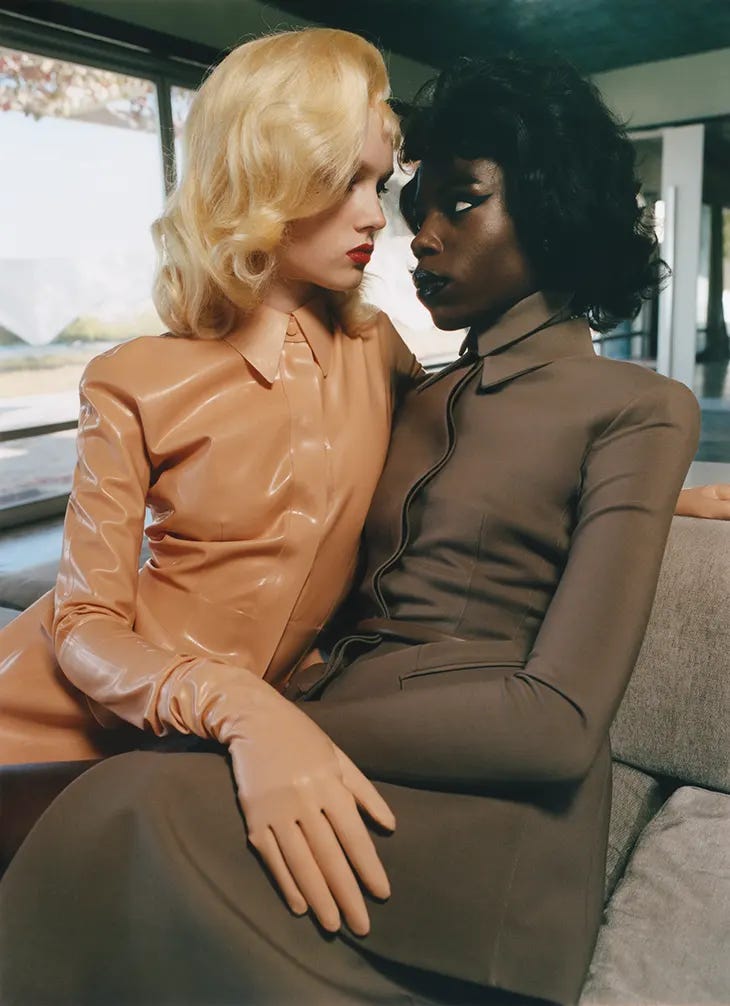
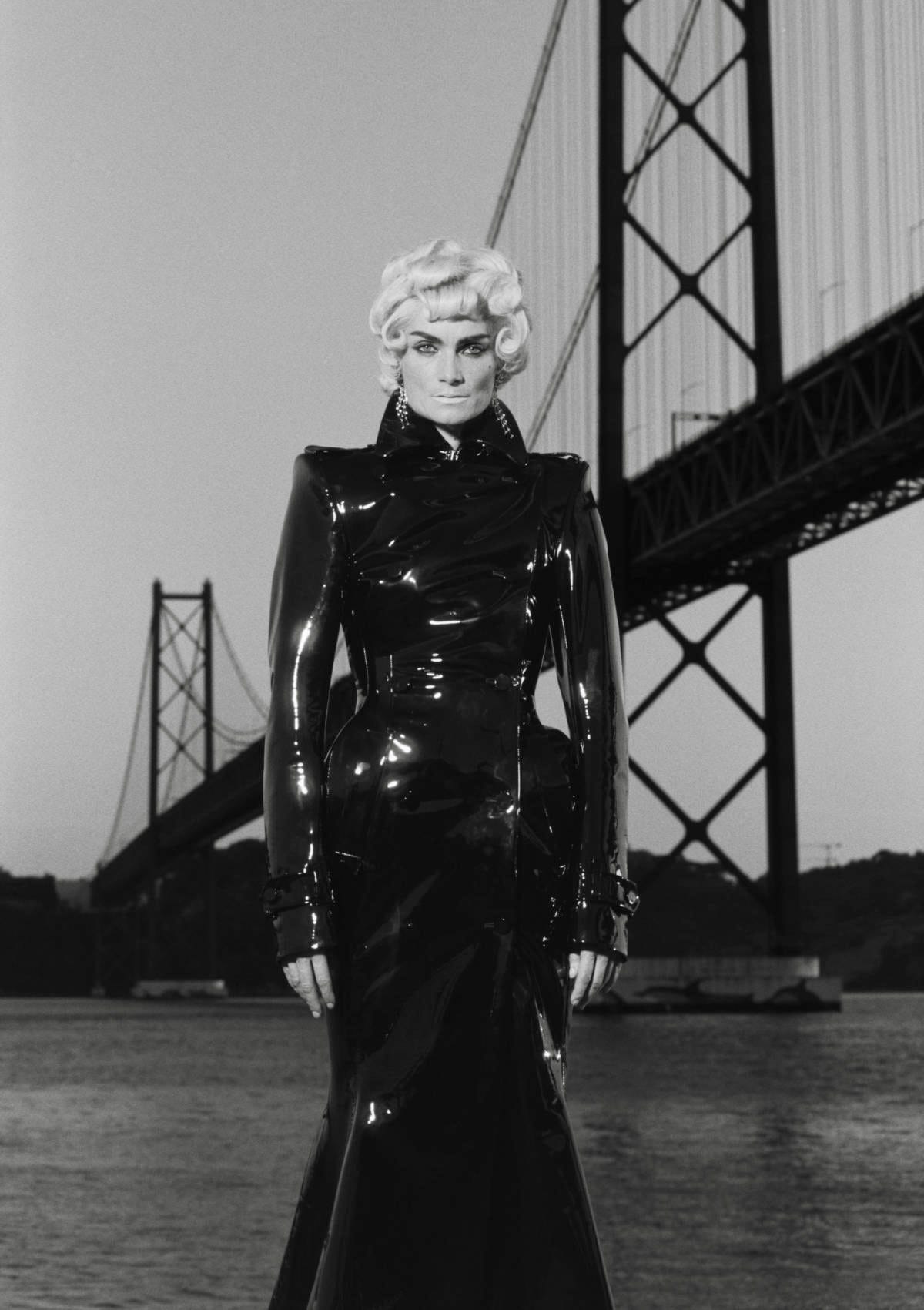
Castro Freitas also introduces the Lua and Aurora handbags — sculptural, futuristic, and integrated into the narrative as props with personality. Totally aligned with Mugler’s idea of power dressing.
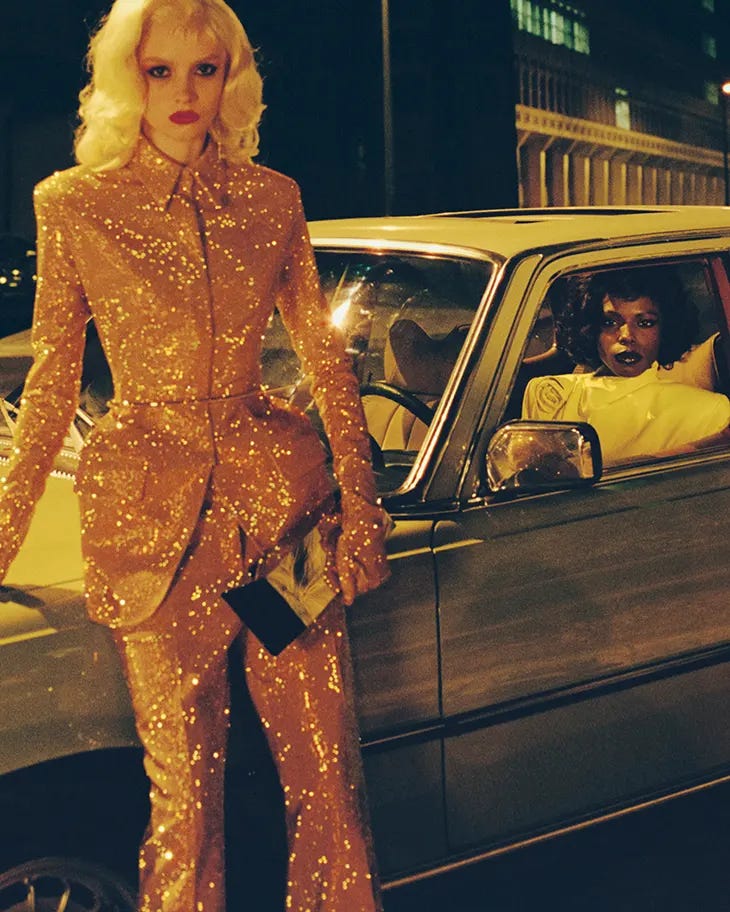
Culturally, the campaign lands in a moment where femininity, empowerment, and sexual fantasy overlap in complicated ways. There’s a performative eroticization of power happening — women reclaiming spectacle, kink aesthetics, and image control on their own terms. Mugler doesn’t shy away from it; it leans in without flattening it into a joke or cliché.
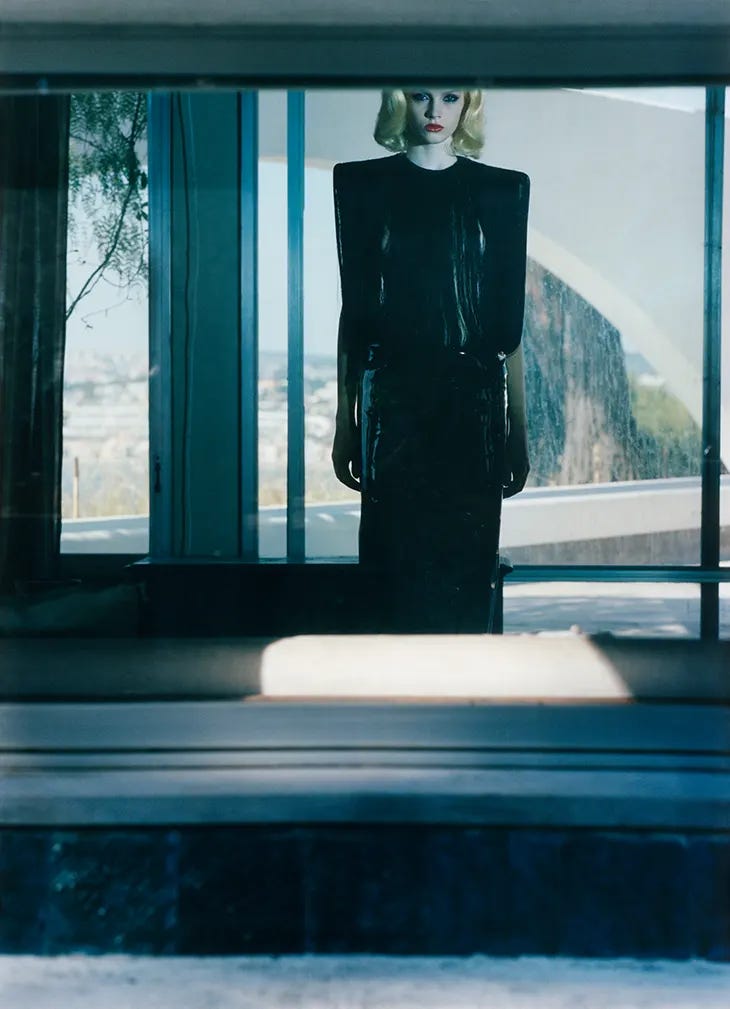
Castro Freitas puts it directly:
“At Mugler, I’m drawn to strong, glamorous characters where power becomes visceral. This campaign, the first part of a trilogy, crystallizes that philosophy. It’s a story of identity and transformation, of strong women who refuse definition.”

If this is chapter one, the trilogy format makes perfect sense. Stardust Aphrodite feels less like a lookbook and more like the start of a cinematic universe — worldbuilding, narrative arcs, emotional stakes. And honestly, I can’t wait for the sequel.