


“To understand bad taste, one must have very good taste,” said John Waters in his 1981 book Shock Value: A Tasteful Book About Bad Taste.
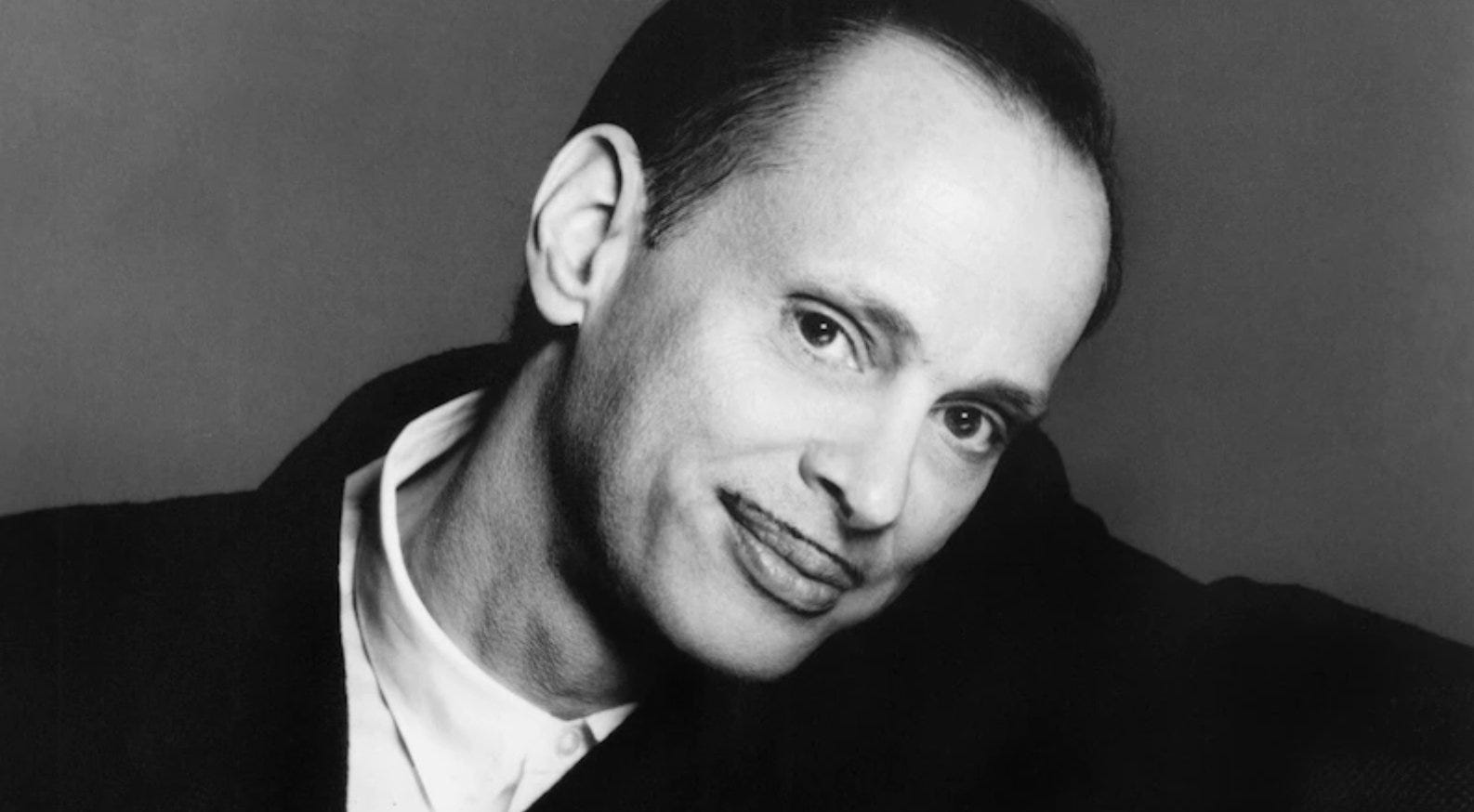
Nicknamed “The Pope of Trash,” John Waters is a Baltimore-based filmmaker who built his career from DIY, low-budget beginnings into something completely his own. His work fixates on outsiders, crime, sex, and the cracks beneath suburban life, using “bad taste” not as a flaw, but as a deliberate weapon.
In Shock Value, Waters explains “bad taste” as central to what makes his work entertaining, arguing that truly appreciating it takes “very good taste” – the ability to tell the difference between “good bad taste” and just…bad bad taste.
Enter Divine, “The Queen of Filth.”
John Waters and Glenn Milstead met in high school in the early 1960s, bonding over their shared love of shocking, unconventional art. Milstead became Waters’ muse, and from that, Divine was born.
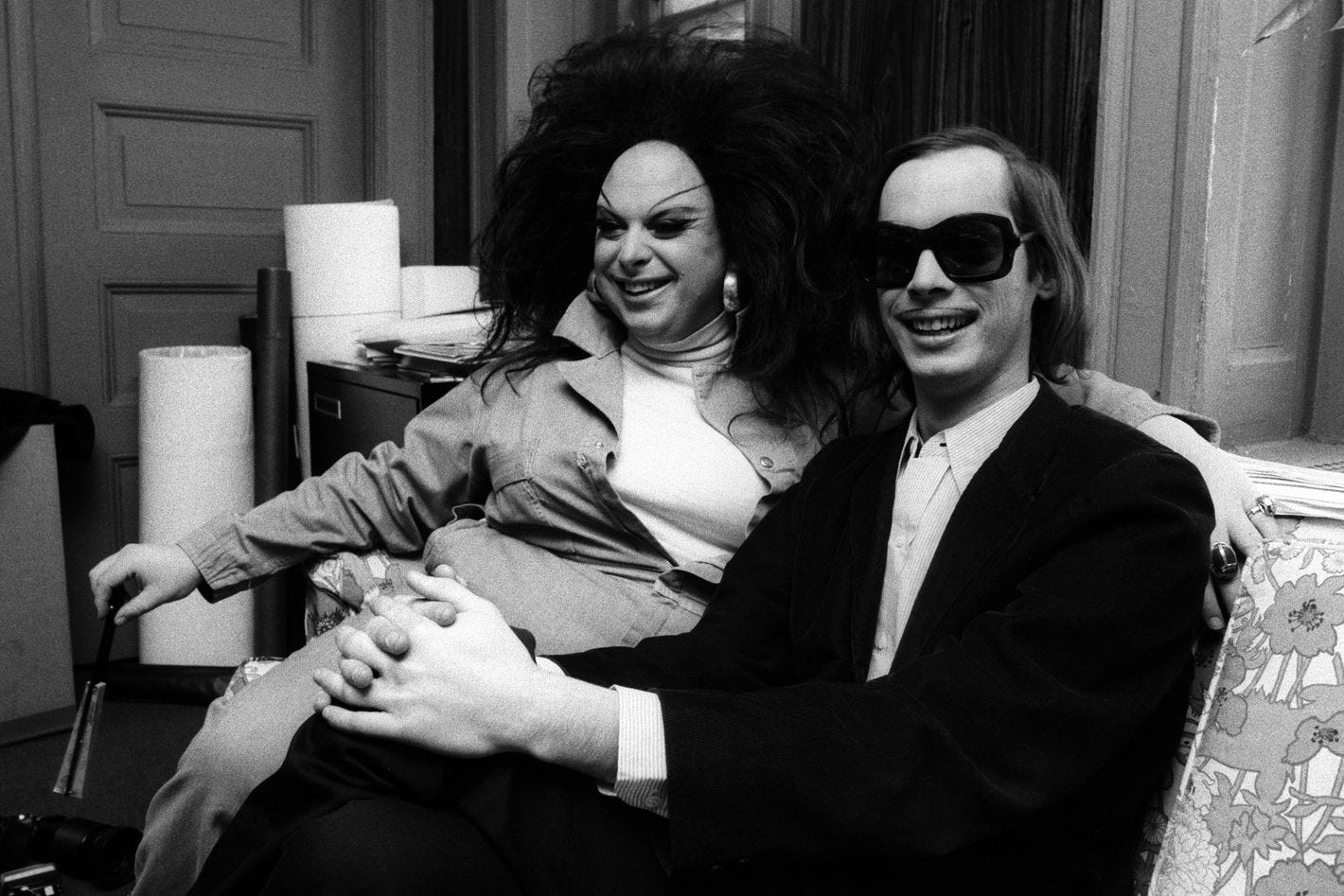
As a drag queen, Divine became the blueprint for Waters’ aesthetic: extreme makeup, exaggerated silhouettes, and over-the-top styling – what could only be described as “pretty ugly.” From latex to leopard print to sequins to vintage silhouettes, Divine had it all.
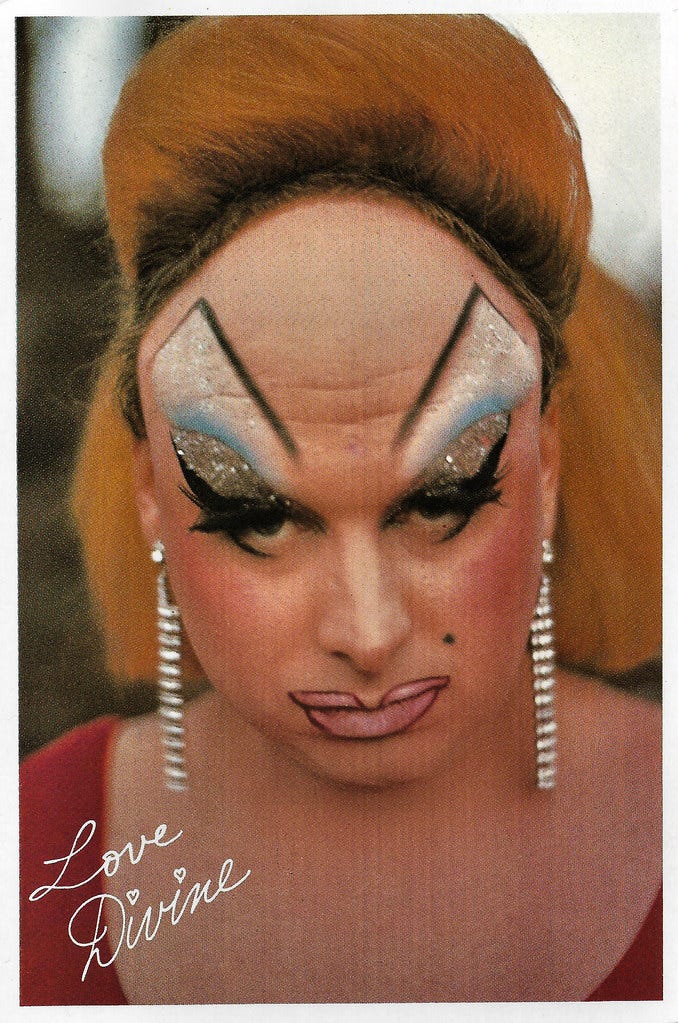
Waters’ first major breakthrough came with Pink Flamingos (1972), starring Divine as a self-proclaimed “filthiest person alive.” The film is chaotic, offensive, and intentionally disgusting, turning things most people would find disgusting (like animal feces) into the main attraction.
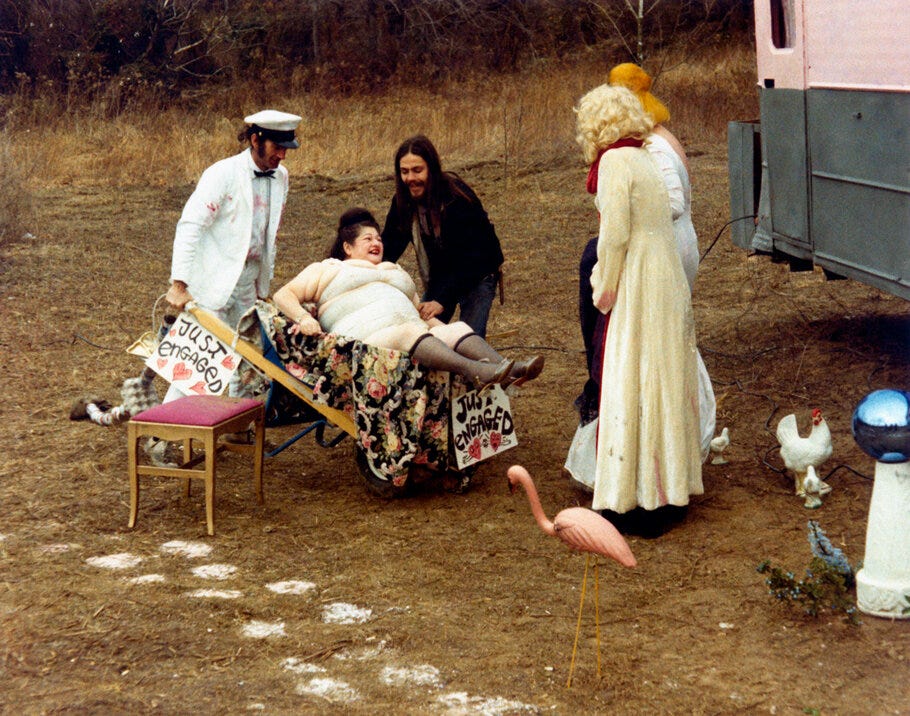
Pink Flamingos would live to be the purest example of John Waters’ style, and the solidification of Divine’s persona.
Basically, if you understand Pink Flamingos, you understand Waters.
And in 1974 came my favorite John Waters film: Female Trouble.
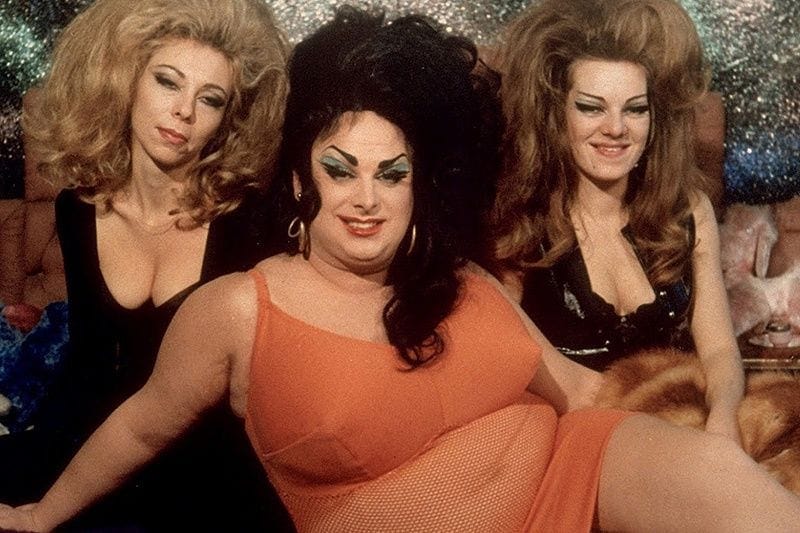
The film follows Dawn Davenport, a rebellious teenager who turns her violent, chaotic life into a twisted form of fame. It’s camp, absurd, and packed with iconic visuals – babydoll dresses, metallic leopard print, a completely sheer wedding dress – along with unforgettable lines like “nice girls don’t wear cha-cha heels!”
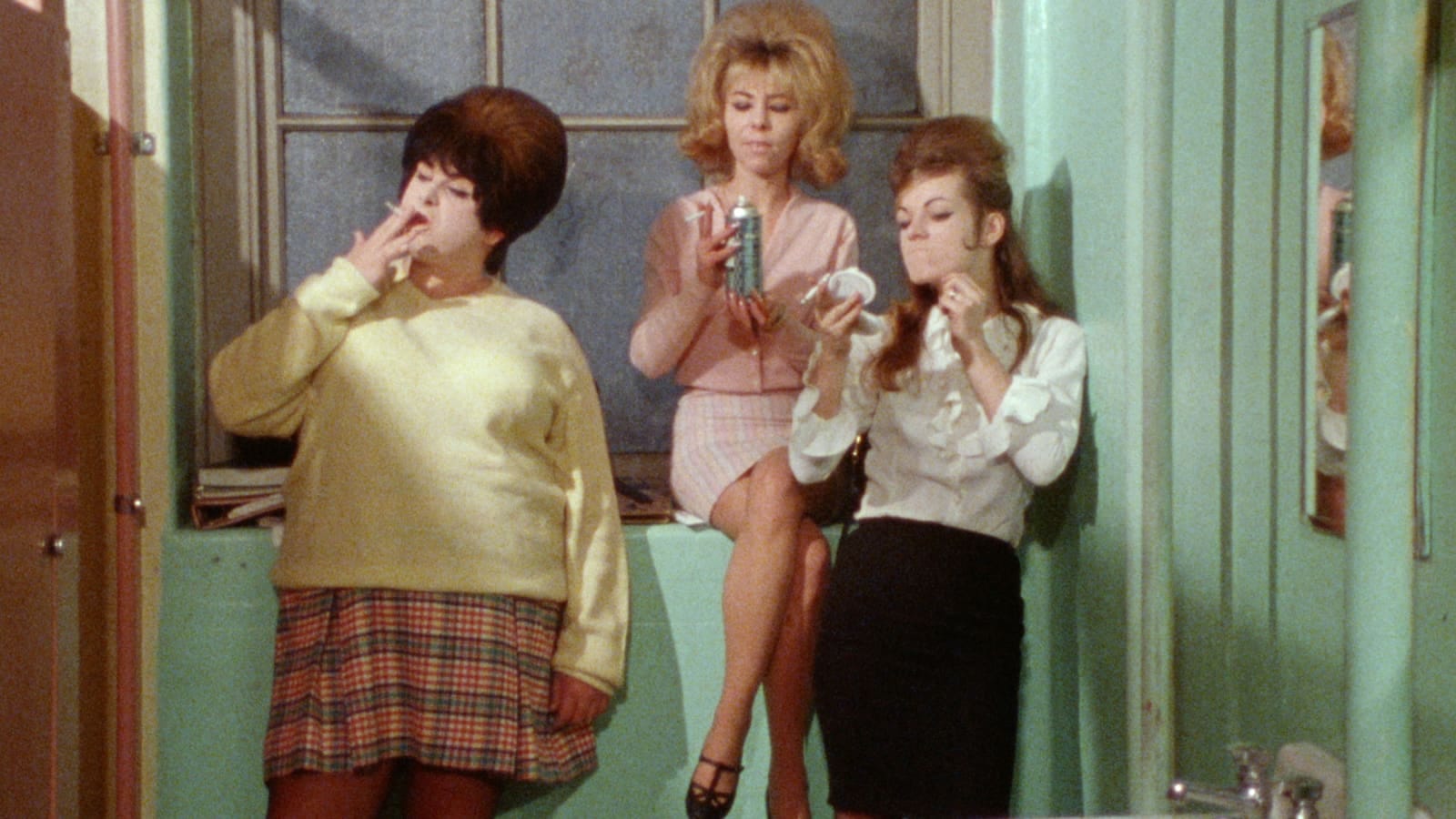
By Polyester (1981), Waters’ style became more structured, yet still camp, parodying 1950s suburban melodrama. Divine’s performance is more restrained, but still exaggerated enough to expose the illusion of “perfect” suburban life.
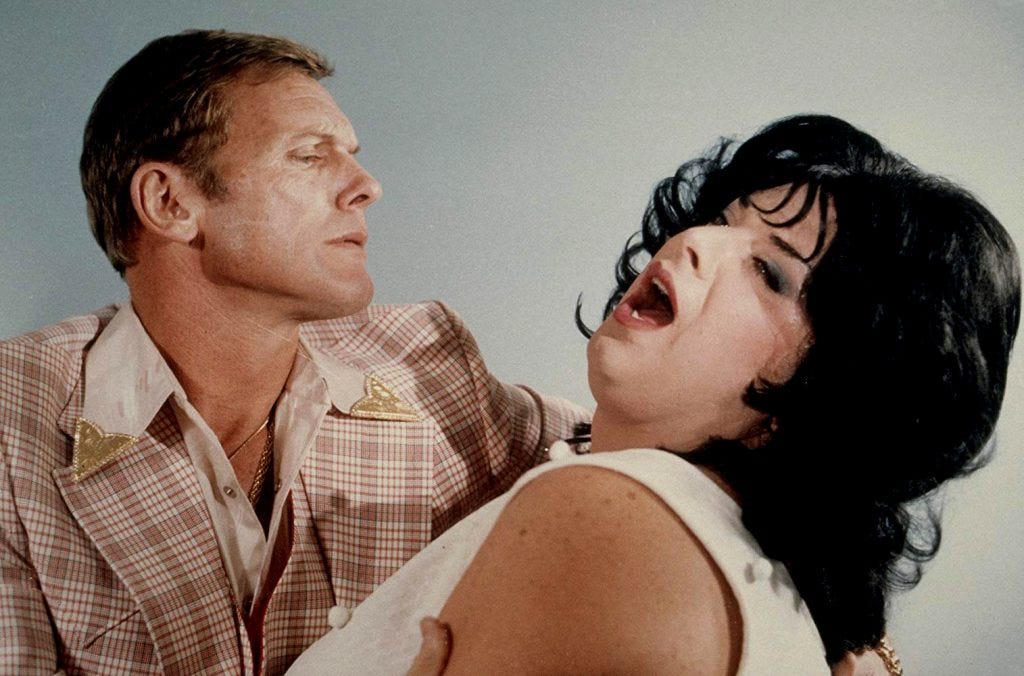
Then came what would be his biggest mainstream success, Hairspray (1988).
Hairspray would be released with a star-studded cast: Ricki Lake as Tracy Turnblad, Divine as Edna Turnblad, Debbie Harry (of Blondie) as Velma Von Tussle, and Sonny Bono as Franklin Von Tussle.
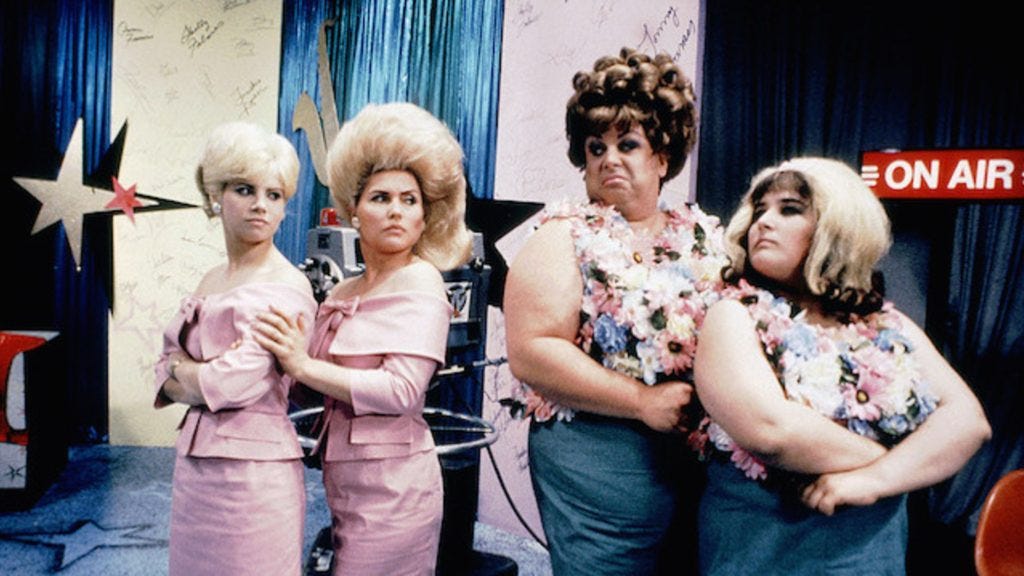
With a larger budget and wider appeal, the film follows Tracy Turnblad, a teenage girl fighting for integration on a local TV dance show. It’s more polished than his earlier work, but still challenges beauty standards and centers outsiders.
What I find really fascinating is that so many people don’t realize that Hairspray is a John Waters film – most people don’t even know about the 1988 version, as the 2007 movie musical and Broadway production have overshadowed the original in the mainstream.
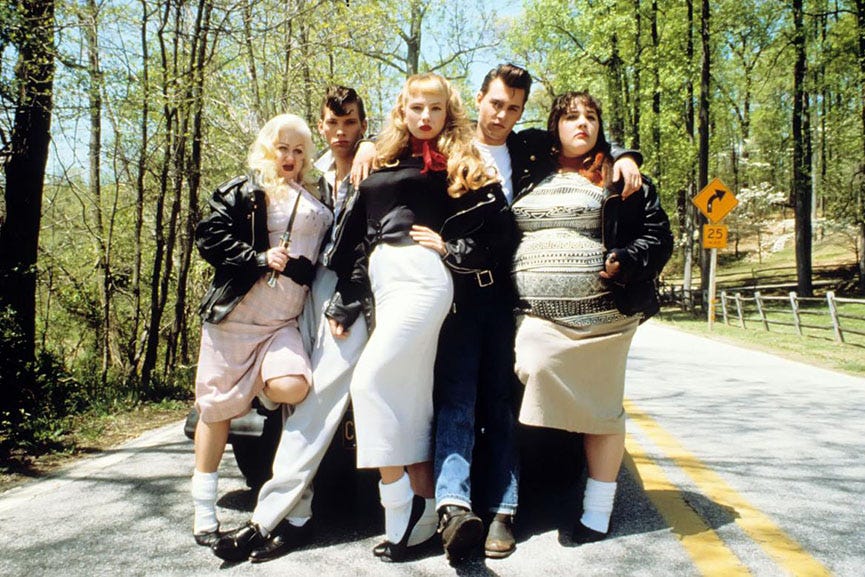
From there, films like Cry-Baby (1990), starring a young Johnny Depp, and Serial Mom (1994) continued his shift into the mainstream, keeping his satirical, campy edge in a more accessible format.
At the core of all of this is Waters’ – in his words – good bad taste.
He blends kitsch and trash into something strangely glamorous. Cheap fabrics, loud prints, artificial suburban interiors, thrift store aesthetics, and “tacky” Americana, transforming what’s usually seen as low or disposable into a bold visual style – one so recognizable to his image.

His work also embraces the grotesque, especially in how bodies are presented. Characters don’t fit traditional beauty standards; they’re messy, sweaty, and chaotic. This rejection of polish creates a new kind of aesthetic where imperfection is center-stage, to a point that borders on uncomfortable, or even immoral.
All of this operates through camp.
As Susan Sontag describes in Notes on Camp, it’s about loving something not despite its bad taste, but because of it – and Waters takes that idea to the extreme.
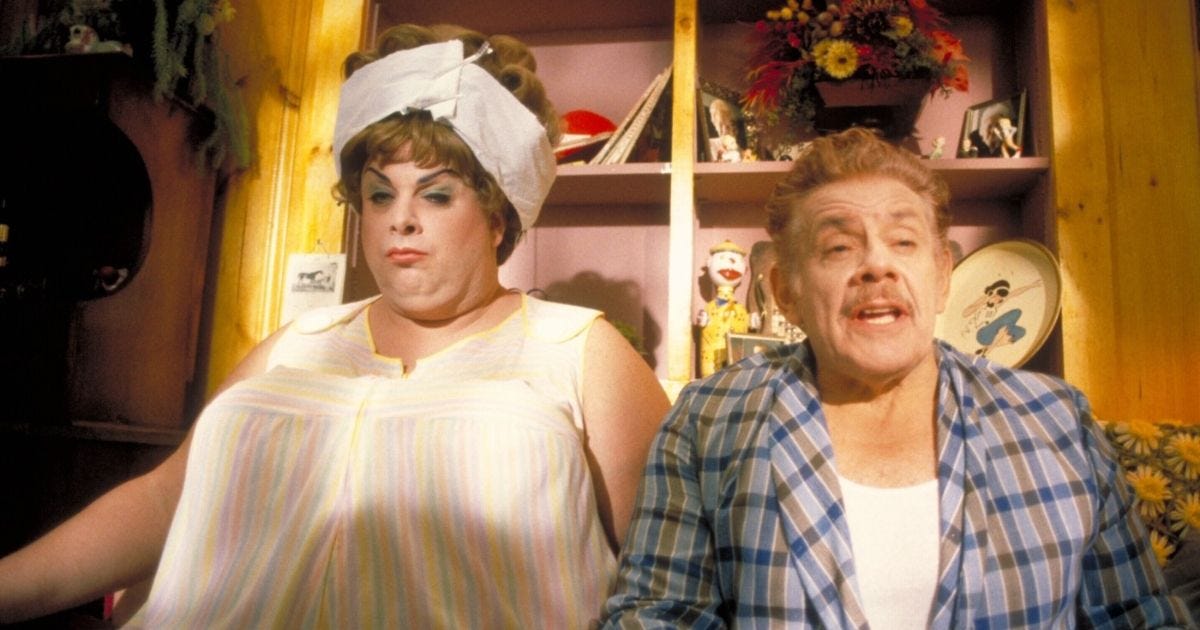
His influence is especially clear in fashion.
Designers like Marc Jacobs, Moschino, and Prada have embraced clashing prints, exaggerated silhouettes, and “ugly” aesthetics in ways that feel distinctly John Waters-coded. Trends like maximalism and anti–clean-girl aesthetics continue this shift, favoring chaos, layering, and personality over polish.
And that’s why “bad taste” works.
It creates freedom. When you reject the idea that there’s only one right way to look, dress, or create, you open space for individuality. Being loud, awkward, or unconventional becomes a strength rather than something to hide.
Through his work, John Waters shows that ugliness isn’t the opposite of beauty – it’s just another way of getting there!