


Content note: explicit sexual themes and imagery.
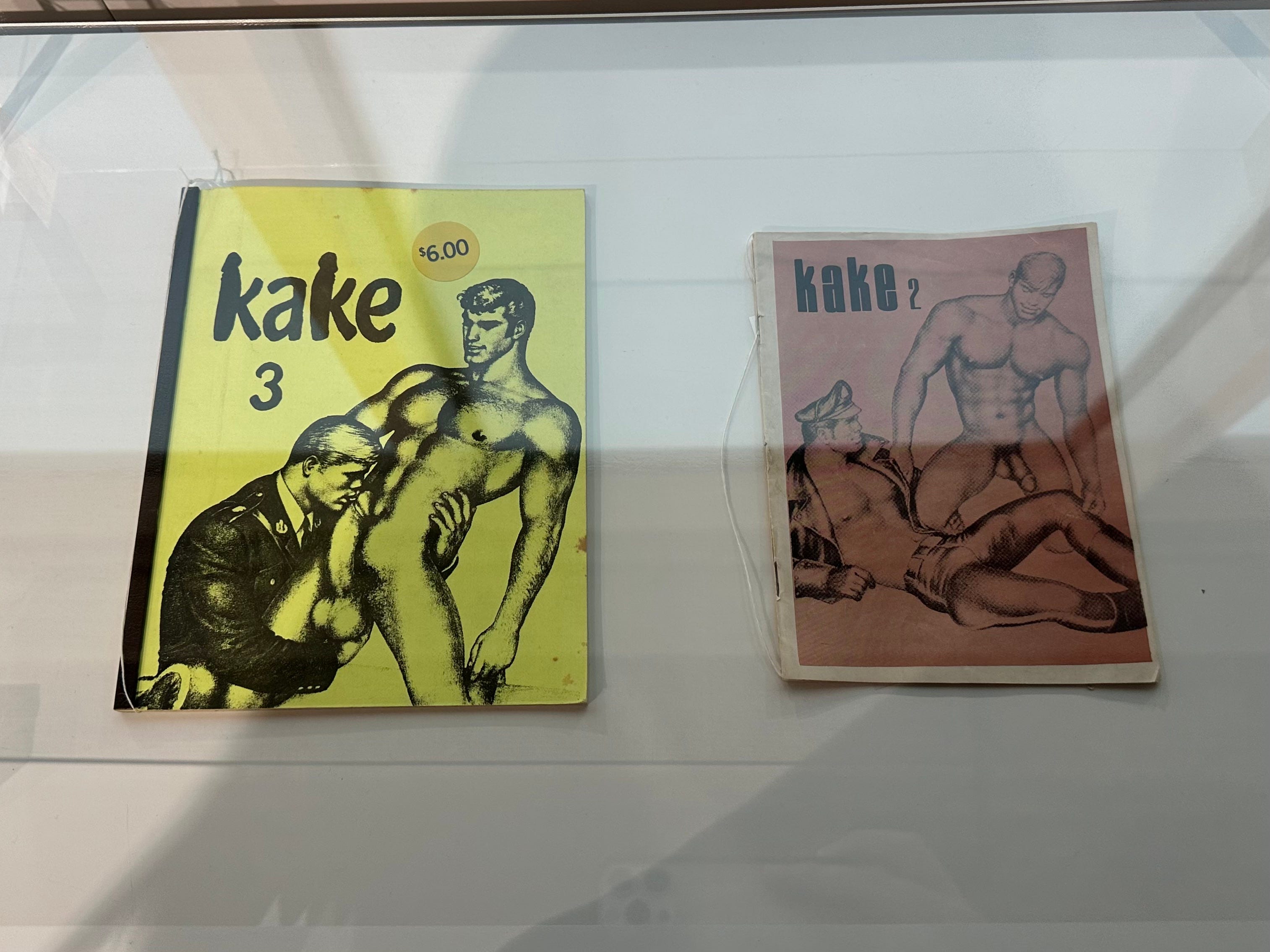
A six-dollar sticker still clings to a copy of Kake 3, the fictional title character of the 26-issue series Tom of Finland published between 1968 and 1986.
It sits behind glass at HARD BOUND, Tom of Finland Foundation’s first print archive exhibition in New York City, looking less like cultural history than something somebody might have once bought, stuffed into a bag, carried home, copied, or left in another man’s hands. Elsewhere in the archive, old prices remain visible on other editions of Kake. One dollar. Six dollars. Small reminders that before these objects became artifacts, they were meant to circulate.
Before Tom of Finland was an institution, he was something that moved.
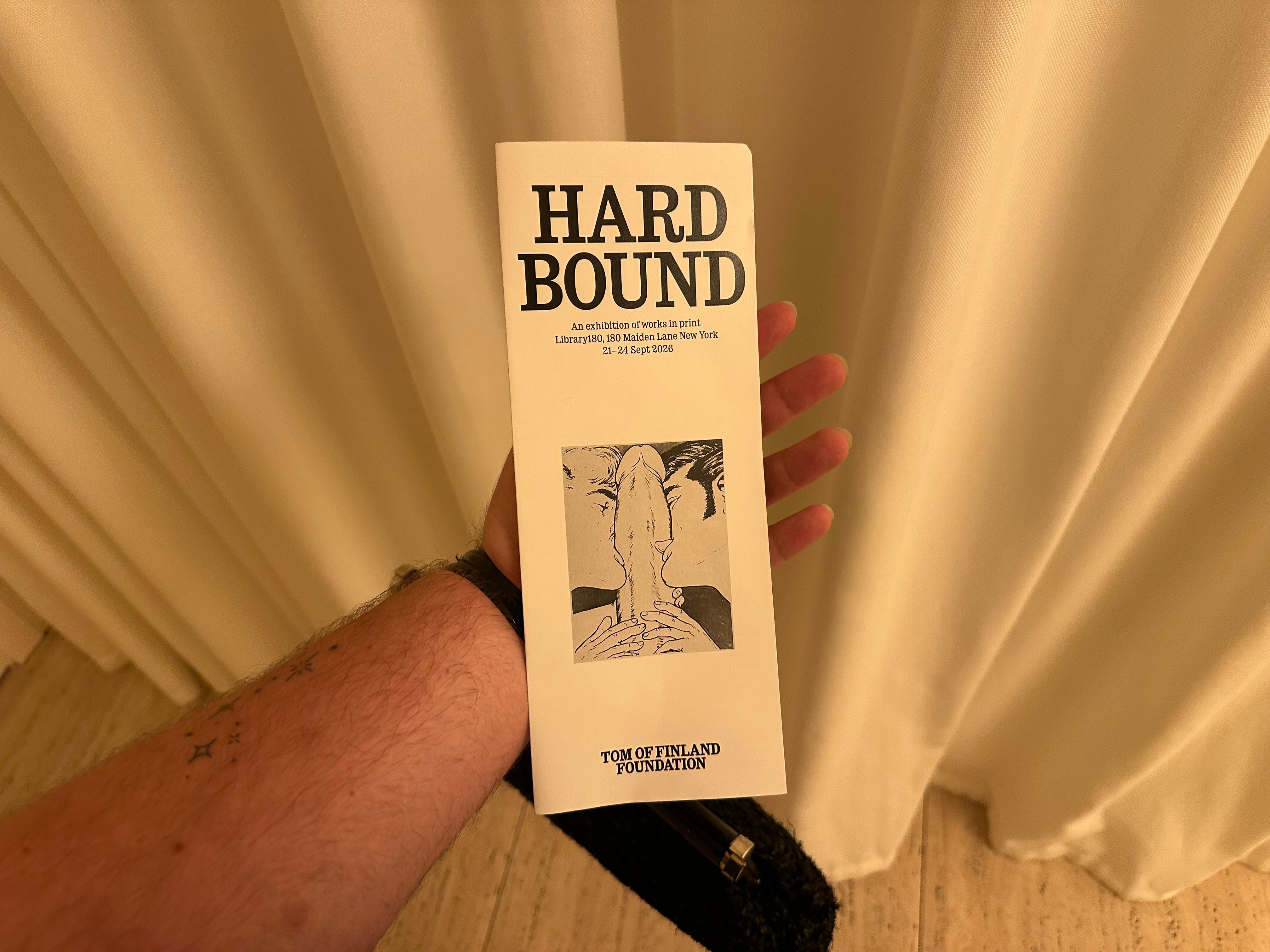
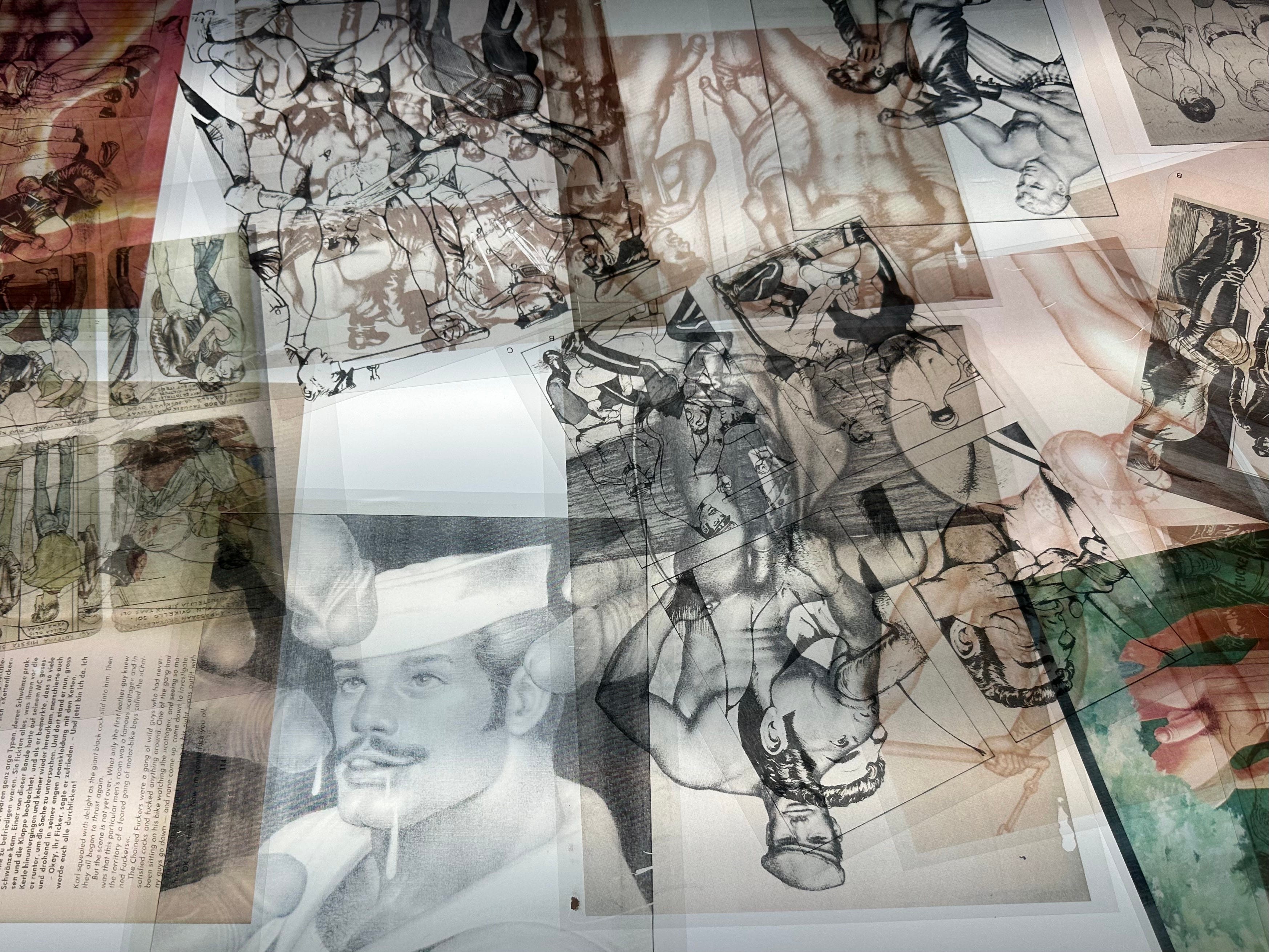
Presented at Library180 in downtown Manhattan, HARD BOUND brings together published works from the Kake series, early print compilations, collages, preliminary drawings, and other materials that trace Tom’s images from sketched ideas to glossy prints. The exhibition is open for public viewing by appointment through September 24. Visitors can request an appointment at librarian@library180.com.
At first glance, the exhibition is about print, but what it reveals is something much larger: the role circulation played in building queer visual culture before queer culture had systems and institutions willing to collect, protect, or even acknowledge it.
Tom’s hypermasculine men—leathermen, bikers, soldiers, sailors, working men with impossible muscles and even more exaggerated proportions—became recognizable far beyond the pages on which they first appeared. However, their influence isn’t just about images being seen, but about the much more intimate networks through which those images moved.
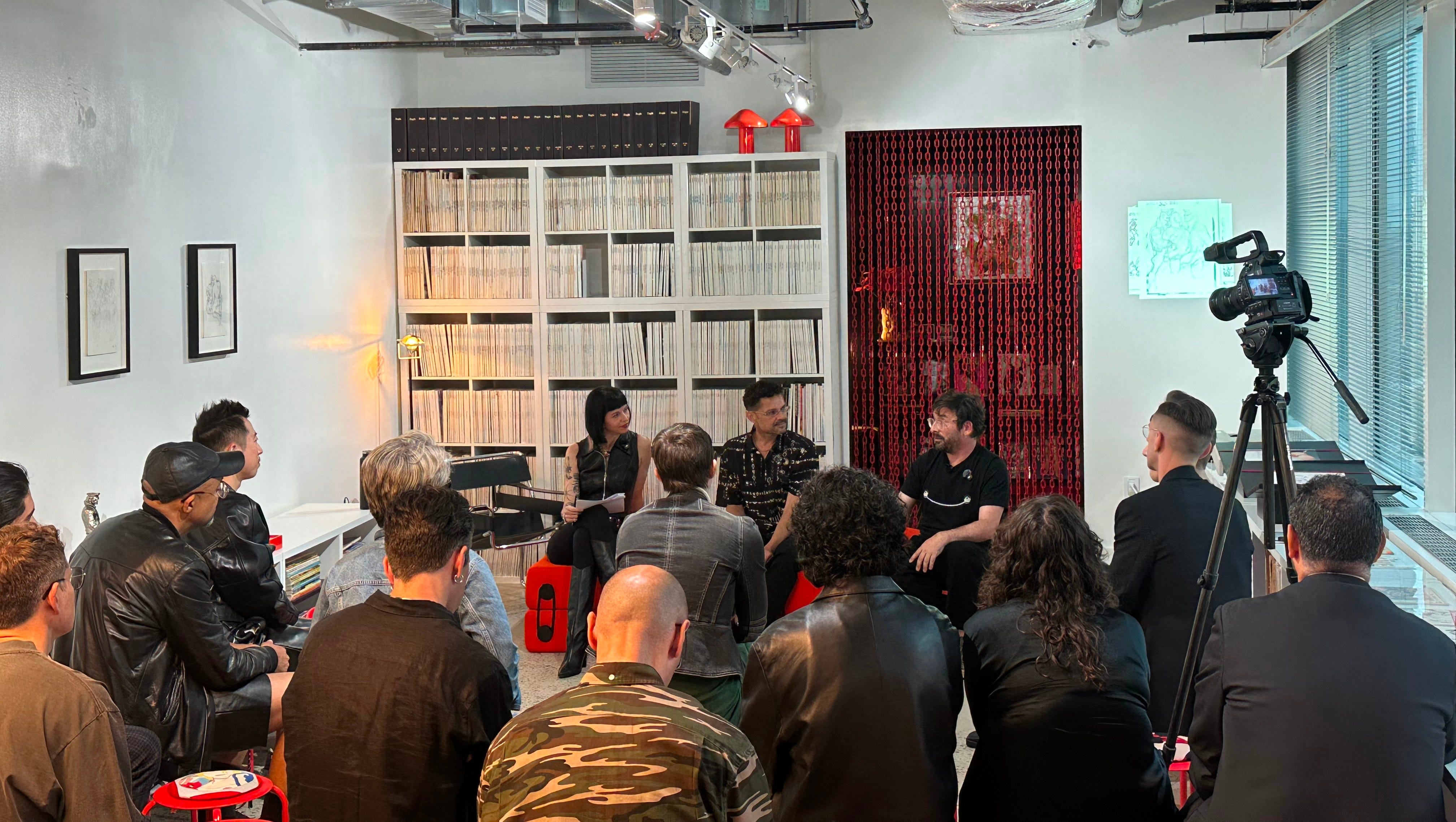
During the September 20 panel, visiting scholars Kirin Wachter-Grene and Andy Campbell joined cultural critic Michael Bullock in a conversation about Tom’s work, erotic media, and queer visual culture. Again and again, the discussion returned to the ways sexually explicit material once moved between people.
A man might receive a Tom from another man after a hookup. He would keep it, make a copy, and eventually pass that copy to another man. Then, he might do the same. In a culture without reliable institutional preservation (and in which publishers, libraries, and museums deemed much of the material unacceptable), preservation could mean a drawer, an image taped to a wall, or simply something kept in another person’s hands.
One of my favorite anecdotes from the panel involved writer Samuel R. Delany and his novel Hogg.
Hogg went unpublished for decades, but that didn’t stop it from circulating. During the panel, a story was recounted in which Delany came across a copy of his own unreleased book through another man during a sexual encounter. Rather than reveal himself as the author, he acted as though he didn’t recognize it.
Neither Delany nor a publisher had released the book, but it had already found a readership.
There may have been no clean sales record, no first-edition launch, no neat trail of authorized distribution. Instead, copies of copies circulated between people whose relationships might have lasted years or a single night.
Tom of Finland’s work existed within a very similar ecosystem. Some of it was formally published and sold. Some of it moved through less official channels.
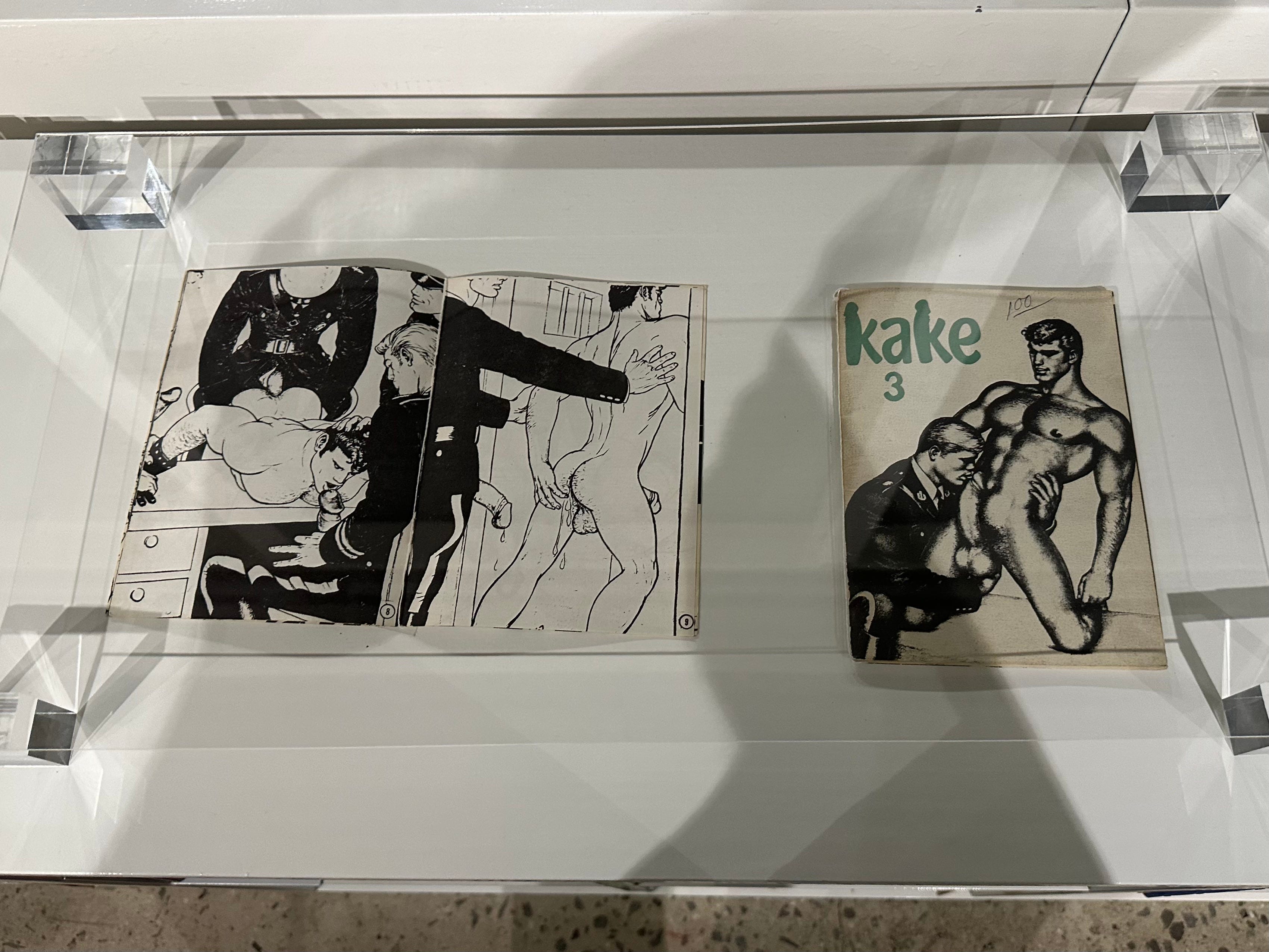
That is what makes the small price tags preserved on the Kake booklets so compelling. They make it harder to see these works as untouchable museum artifacts.
The irony is that HARD BOUND now asks us to encounter many of those objects in precisely the opposite state.
Protected under acrylic and glass, carefully illuminated inside an archive, the material has entered the institutional world that queer erotic media spent so much of its history existing outside of.
But HARD BOUND also complicates the idea that Tom simply documented a gay aesthetic that already existed.
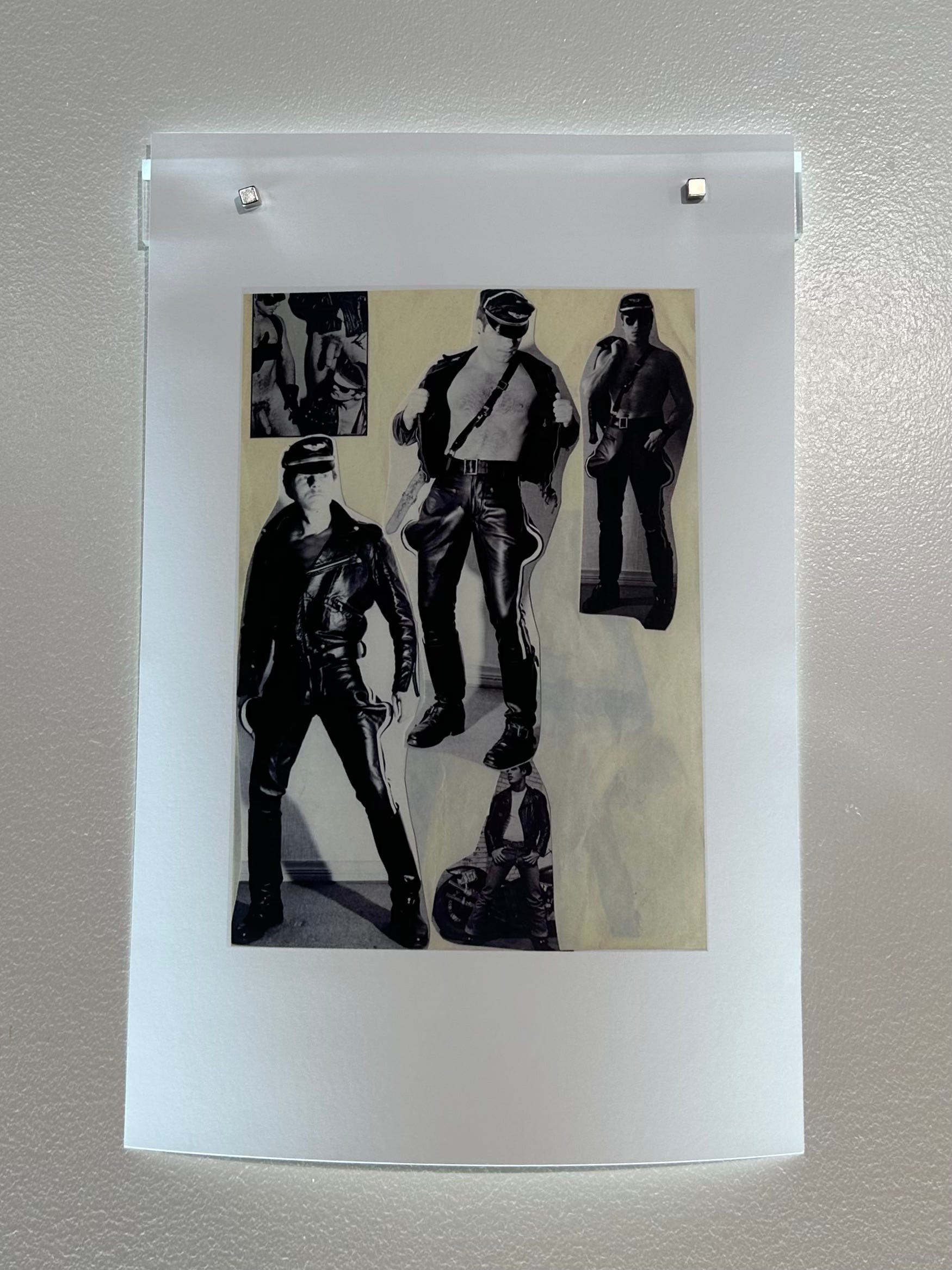
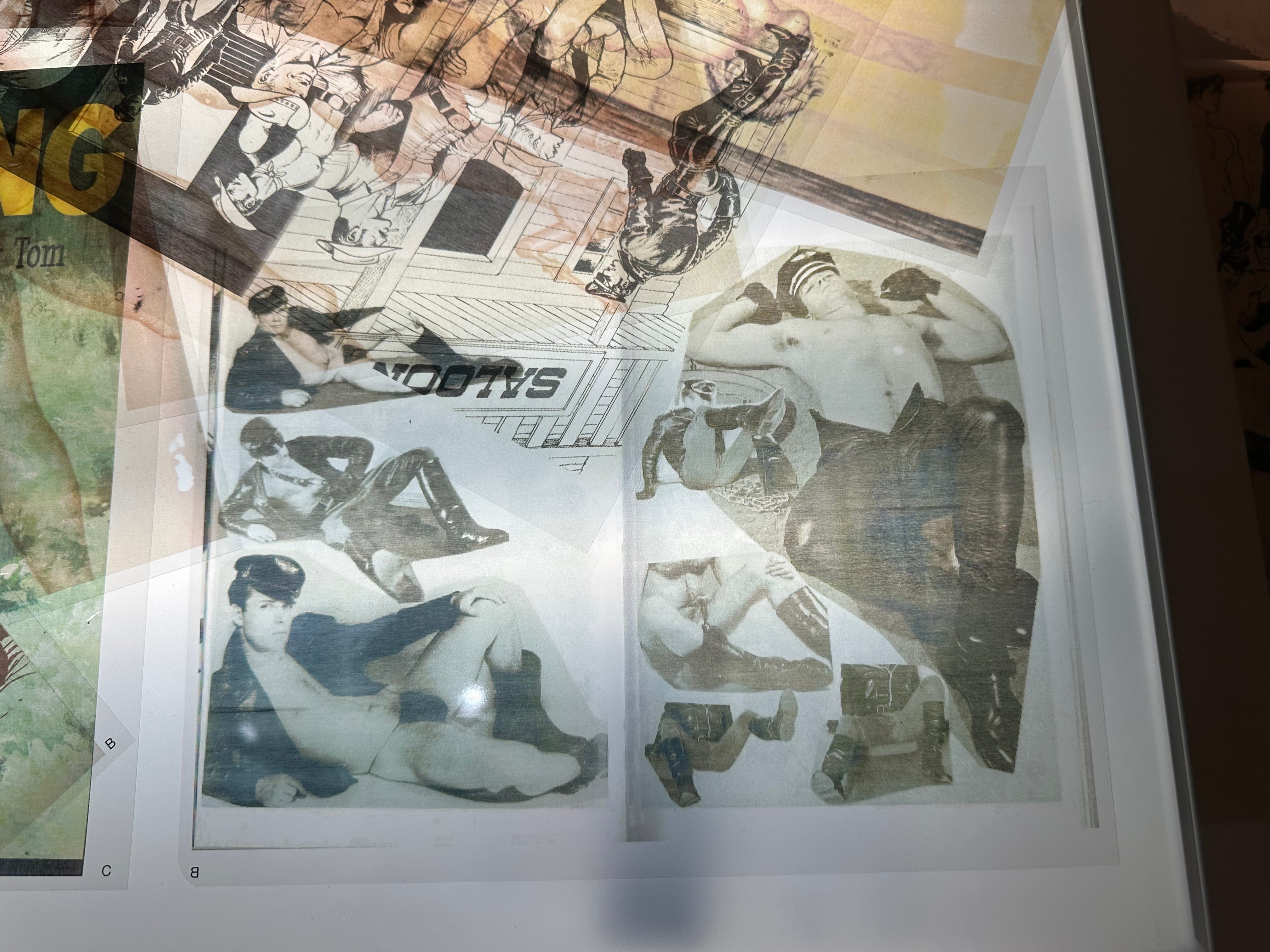
Throughout the exhibition, finished images sit alongside the material from which they emerged. Photographs, clippings, and collages reveal an artist who collected visual fragments of manhood and reconfigured them into fantasy.
Farmers and fishermen were among Tom’s earliest fascinations. Working-class masculinity was his erotic material. From there came leather jackets, sailor hats, work boots, police caps, and denim; the visual vocabulary now so inseparable from both his name and a broader queer culture.
This “working-man” archetype was then exaggerated and perfected to fulfill Tom’s fantasy. The drawings were reproduced; the reproductions circulated; people saw them and began embodying parts of Tom’s fantasy in their lives.
Reality became an image, and the image returned to reality.
The crowd at the Sunday preview was an eclectic mix of generations, nearly everyone dressed in black. For some, the reference to fetish and leather culture was subtle—a bulldog harness over a white tee or a Muir cap paired with slacks and a blazer.
Others looked as though they could have stepped directly from one of the books displayed around the room. As if the archive had walked in to look at itself.
That is part of what makes Tom’s influence difficult to reduce to art, or even pornography.
His imagery became a vocabulary.
Leather does not belong to Tom of Finland, nor did he create the communities that adopted it. But his work helped refine and circulate a particular gay fantasy until it became immediately legible, even outside of kink.
“Everyone is always everyone else’s hole,” Bullock said during the panel.
The room laughed, but the observation gets at something important about Tom’s work.
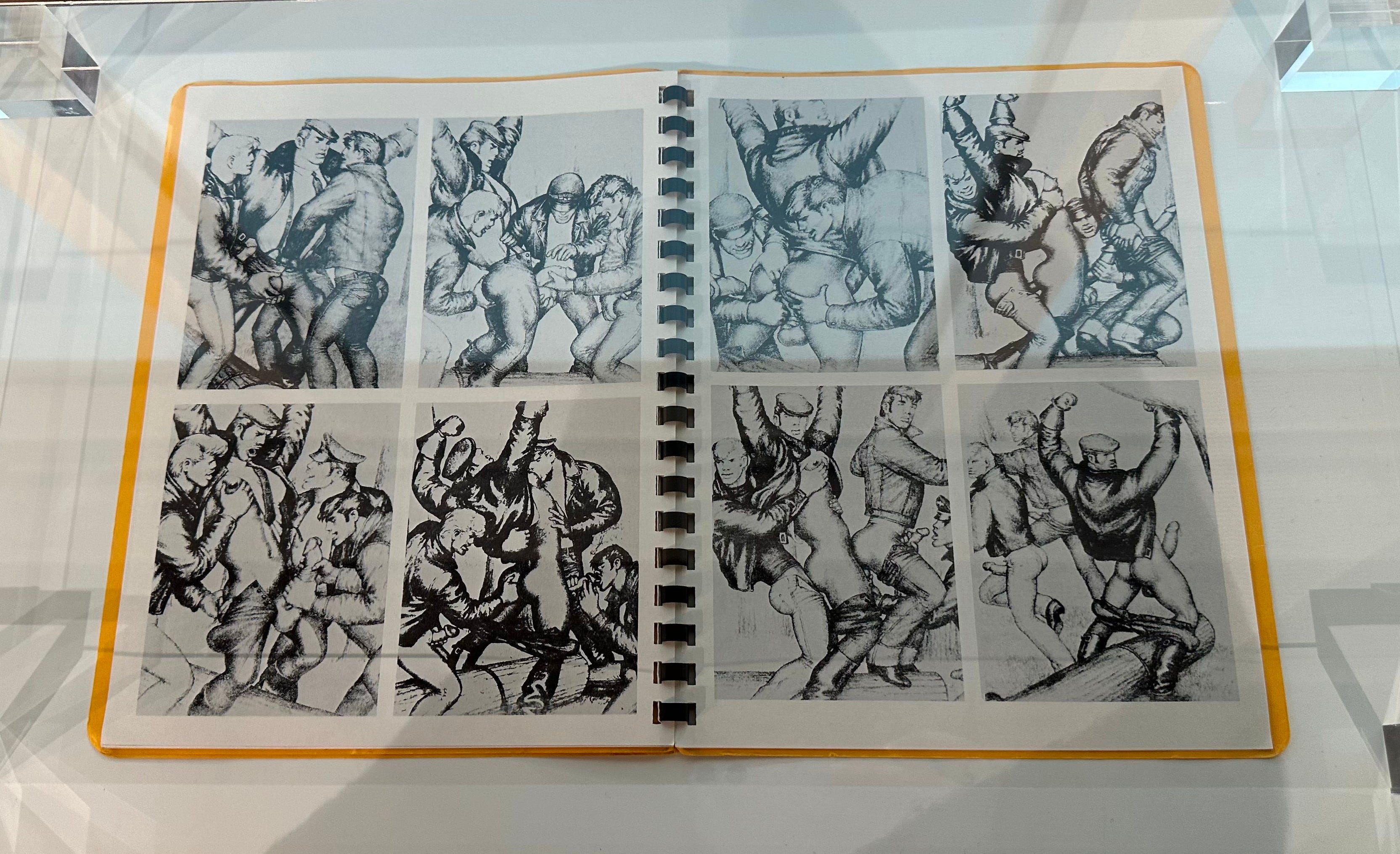
While the men appear hypermasculine, the world they inhabit is not especially interested in protecting masculinity through sexual restraint. Desire moves freely between them. Roles shift. Pleasure is abundant. There is little room for shame.
Bullock offered another blunt distinction: there may be people pissing on one another in Tom’s drawings, but, as he put it, “there’s never people shitting on each other.”
The distinction exposes how carefully constructed even a seemingly unrestrained fantasy can be. Tom’s world is not reality without rules.
There is danger, domination, authority, but there is also relentless optimism about sex. His men desire and are desired. However exaggerated their bodies may be, perhaps the greatest fantasy is the ease with which they surrender to desire.
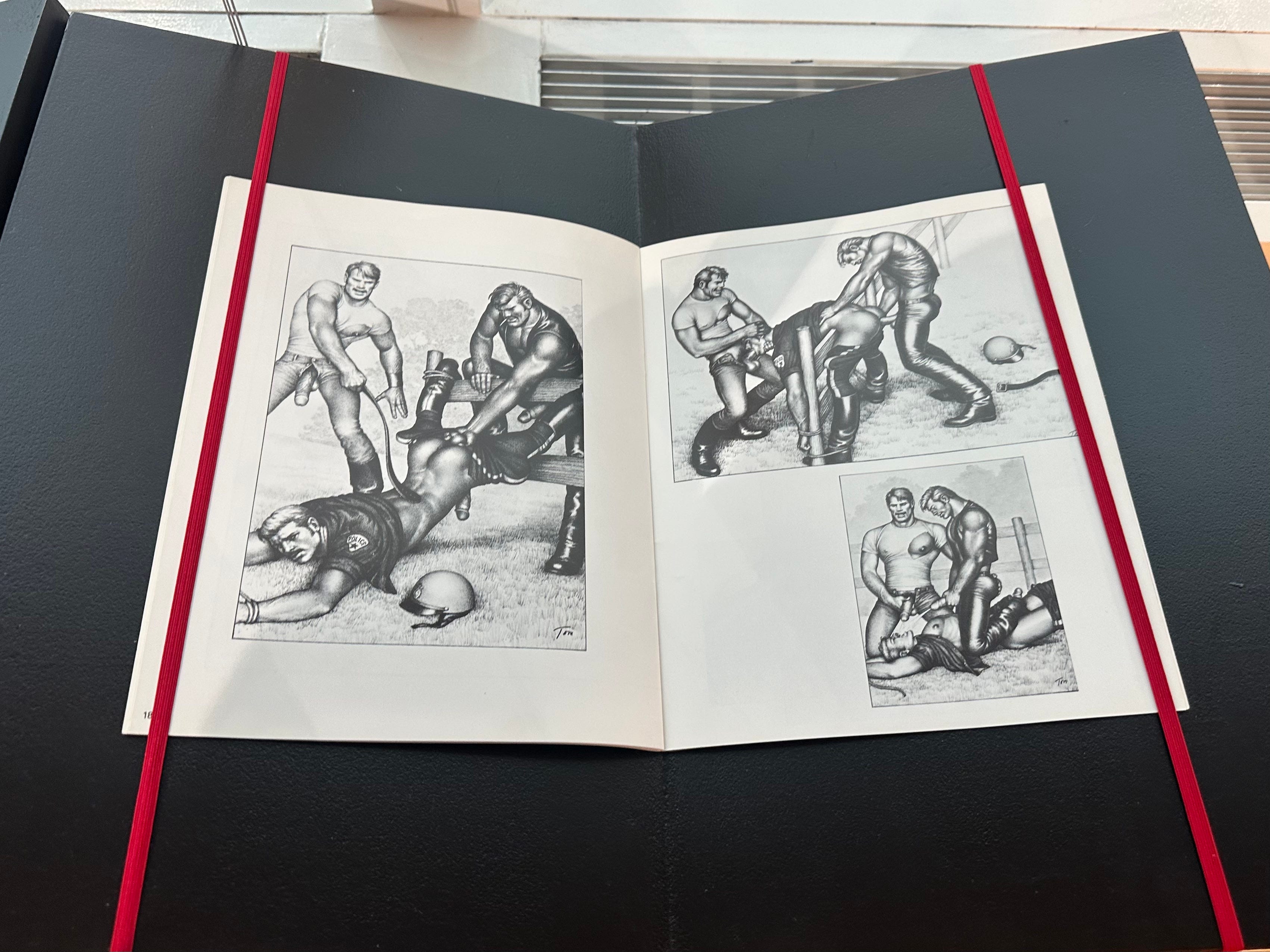
That matters when looking at work created before gay liberation, contemporary gay media, and hardcore pornography could circulate the way they do today.
This is where HARD BOUND becomes less an exhibition about Tom of Finland alone than an exhibition about media itself.
A man sees a drawing. He recognizes a fantasy. He buys the booklet. He gives it to somebody else. That person makes a copy. Somebody across the world eventually sees the same visual language. Maybe he buys a leather jacket. Maybe he draws something of his own. Maybe he photographs himself. Maybe the image makes its way back into another publication.
The history of queer print can be understood this way: as a system of people repeatedly deciding that something was worth keeping and passing on.
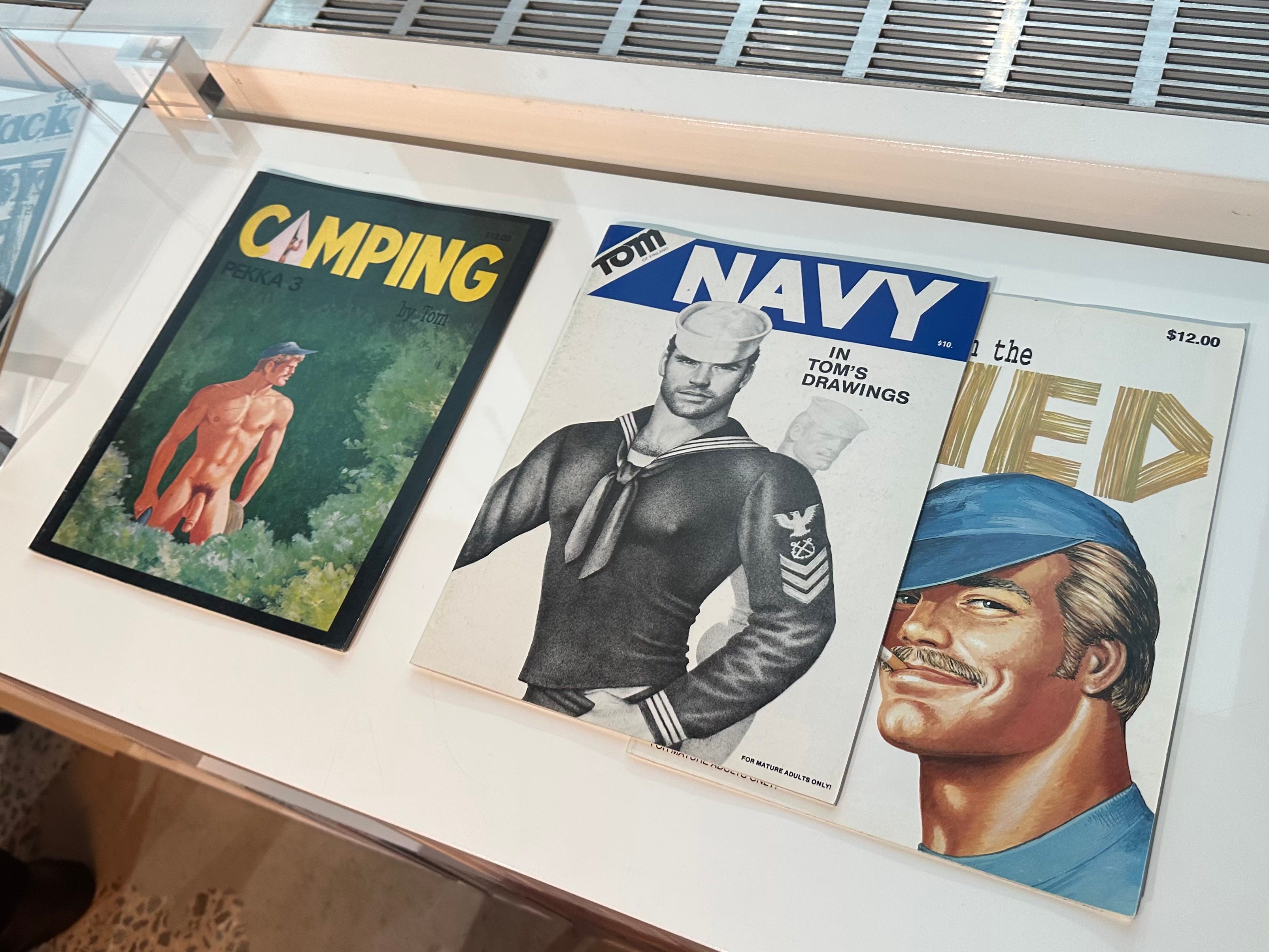
That makes the current state of the Kake booklets so moving. Their old prices remain attached, as traces of the ordinary lives these extraordinary objects once lived.
Now, they serve as evidence of an artist’s process, the creation of queer archetypes, and the informal systems through which gay media survived and spread.
The paradox of HARD BOUND is that these objects are being preserved today by preventing precisely what once made them powerful. Nobody is going to pick up the six-dollar Kake, tuck it under an arm, make a copy, and hand it to someone later that night.
The object survives because it has finally stopped moving, but for much of its life, survival depended on exactly the opposite.